History of Advance Lodge No. 635 &
Building the Advance Masonic Temple
From its 1867 charter in Astoria Village to the construction of the Temple in 1915, this is the story of the lodge that helped shape Freemasonry in Queens.
Advance Lodge No. 635 F&AM was chartered shortly after the Civil War, at a time when Astoria was still a village and Queens had not yet become part of Greater New York. Over the decades, the lodge grew alongside the neighborhood, helped establish Masonic life across the borough, and ultimately raised a permanent Temple that still stands on 30th Avenue today.
Our Charter History
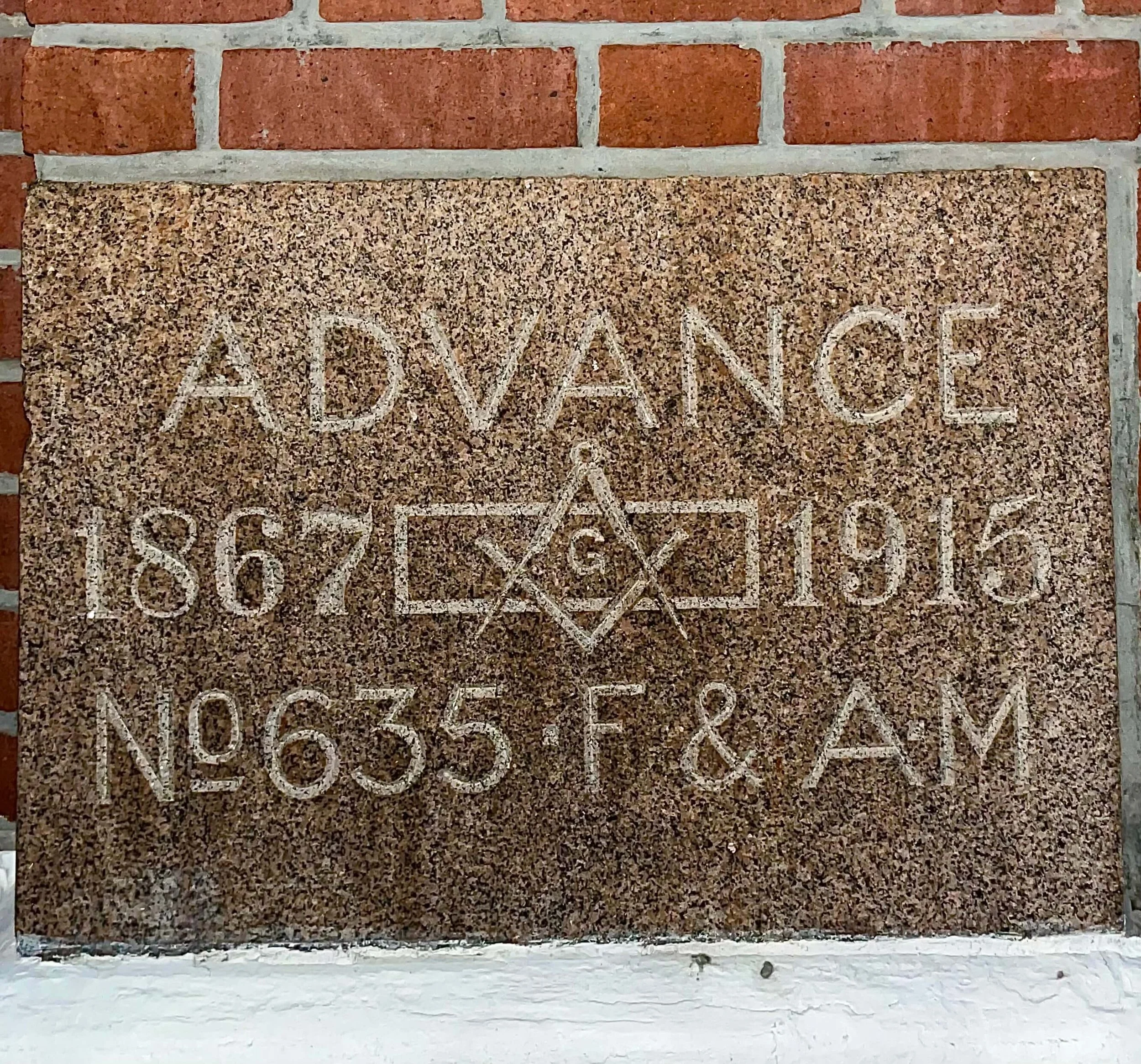
Advance Lodge No. 635 F&AM, named after the USS Advance, was chartered by the Grand Lodge of New York in 1867. That year, still engraved on the Temple cornerstone today, marks the formal beginning of Masonic life for our lodge in Astoria.
The moment is significant. The Civil War had only recently ended. Astoria was still a village. Queens was not yet one of the five boroughs of New York City. In that setting, the founding of a Masonic lodge was not merely ceremonial. It reflected the confidence of a growing community and the determination of local men to build something stable, lasting, and useful.
For many years, Advance Lodge stood as the only Masonic lodge in Astoria Village. Its history forms a central part of the foundation of Freemasonry in Queens.
Read About:
A History of Mergers:
How We Became Advance Service Mizpah Lodge No. 586
Advance Lodge No. 635 remained independent until the 1990s. Since then, it has consolidated with several historic New York lodges, each bringing its own traditions, membership, and neighborhood story.
Today, Advance Service Mizpah Lodge No. 586 carries forward the shared heritage of these lodges while continuing to serve the community with honor and dedication.
City Lodge No 408, Manhattan (1856)
Island City Lodge No 586, LIC (1866)
Advance Lodge No 635, Astoria (1867)
Mizpah Lodge No 738, Elmhurst (1875)
Geba Lodge No 954, Elmhurst (1919)
Service Lodge No 1009, Flushing (1923)
Today, Advance Service Mizpah Lodge No. 586 proudly carries forward the traditions and heritage of these lodges, serving our community with honor and dedication
Read more about our Consolidations Here
Advance, A Cornerstone of Astoria, Queens
Advance Lodge developed alongside Astoria itself. As the village expanded into a more connected and ambitious part of western Queens, the lodge became a lasting local institution.
For decades, Advance Lodge served as a Masonic anchor in Astoria, helping create the framework from which later organizations and local traditions would grow.

Degrees of Growth
Its role was not limited to its own membership. Advance Lodge played an instrumental part in establishing local lodge charters throughout the area and contributed to the wider growth of fraternal life in Queens. Its influence extended into appendant and related bodies that shaped the Masonic culture of the region, including:
Scottish Rite
York Rite
Order of the Eastern Star (OES)
Craftsmen Clubs
Square Clubs
From many bees, one thriving hive
As Masonic organizations in the area expanded, Advance Lodge and its fellow bodies required a larger, permanent home. The brethren gathered resources, purchased land, and began planning a central meeting place that could unite multiple groups and better serve the neighborhood.
This vision became the Advance Masonic Temple.
The cornerstone was laid in a public ceremony in April 1915, the second date now carved into the stone beside the entrance. If 1867 represents the chartering of the lodge, 1915 marks the moment the brethren committed themselves to a permanent Temple in Astoria.
Read About the Cornerstone Ceremony
Establishing the Pillars of Our Porch
The building opened for use in April 1916, and the grand opening drew extraordinary public support. The Temple immediately became a center not only for Masonic activity, but for civic gathering, charitable work, and community life.
Read About the Grand Opening
Pioneering Spirit
Advance Lodge’s historical significance extends beyond the lodge room itself. Astoria was also the setting for important developments in broader Masonic life.
In 1883, while living in Astoria Village, Rose E. Scherer founded the Masonic Organization of the Triangles and established the first order, Triangle 8, here in Astoria. Her work added another chapter to the area’s remarkable place in Masonic history.
This wider fraternal culture, including lodges, women’s organizations, youth organizations, and charitable networks, helped make Astoria an important center of Masonic activity in Queens.
From Grand Street and Van Alst Avenue to 30th Avenue and 21st Street
Today, the Temple stands at 21-14 30th Avenue, just off 21st Street. When it opened in 1916, however, those streets had different names. 30th Avenue was then known as Grand Street, and 21st Street was called Van Alst Avenue.
These earlier names connect the building to an older Astoria and to the local figures who helped shape it.
Van Alst Avenue was named for Peter G. Van Alst, a city surveyor who played an important role in mapping roads and infrastructure in western Queens during its early development. He was also an early member of Advance Lodge No. 635.
His legacy remains visible nearby in places such as PS 171 on 29th Avenue and Van Alst Playground on 30th Avenue, reminders that the history of the lodge is woven into the history of the neighborhood itself.
Read about:

The light of Community Spirit
The Advance Masonic Temple was among the first local buildings supplied with electricity, a modern feature that reflected the spirit of progress surrounding its construction.
That light served practical and charitable purposes. The lodge used electricity to illuminate booths along what is now 30th Avenue, helping raise funds for humanitarian causes related to the war in Europe.
This detail captures something essential about the Temple from its earliest days: it was never intended only as a ceremonial building. It was also a place of public generosity, neighborhood participation, and civic presence.

A Grand Event
The Temple’s week long grand opening took place on Grand St and Van Alst Ave and featured:
Six days of continuous festivities
Thousands of daily attendees
Marching band processions down 30th Avenue
Musical and dance performances in the Lodge’s event hall and backyard
Successful fundraising for the Red Cross, War Bonds, and many other worthy causes
This grand opening marked the beginning of countless charitable efforts, public gatherings, and shared celebrations that would continue at the Temple for generations.
What This History Means Today
The history of Advance Lodge No. 635 is about more than dates and buildings. It is the story of a lodge that helped shape Masonic life in Queens, built a lasting Temple in Astoria, and remained connected to the civic life of its neighborhood through change, growth, and consolidation.
The building still stands. The traditions continue. And the work that began in 1867 remains part of Astoria’s living story.