Island City Lodge No. 586 and the Making of Long Island City
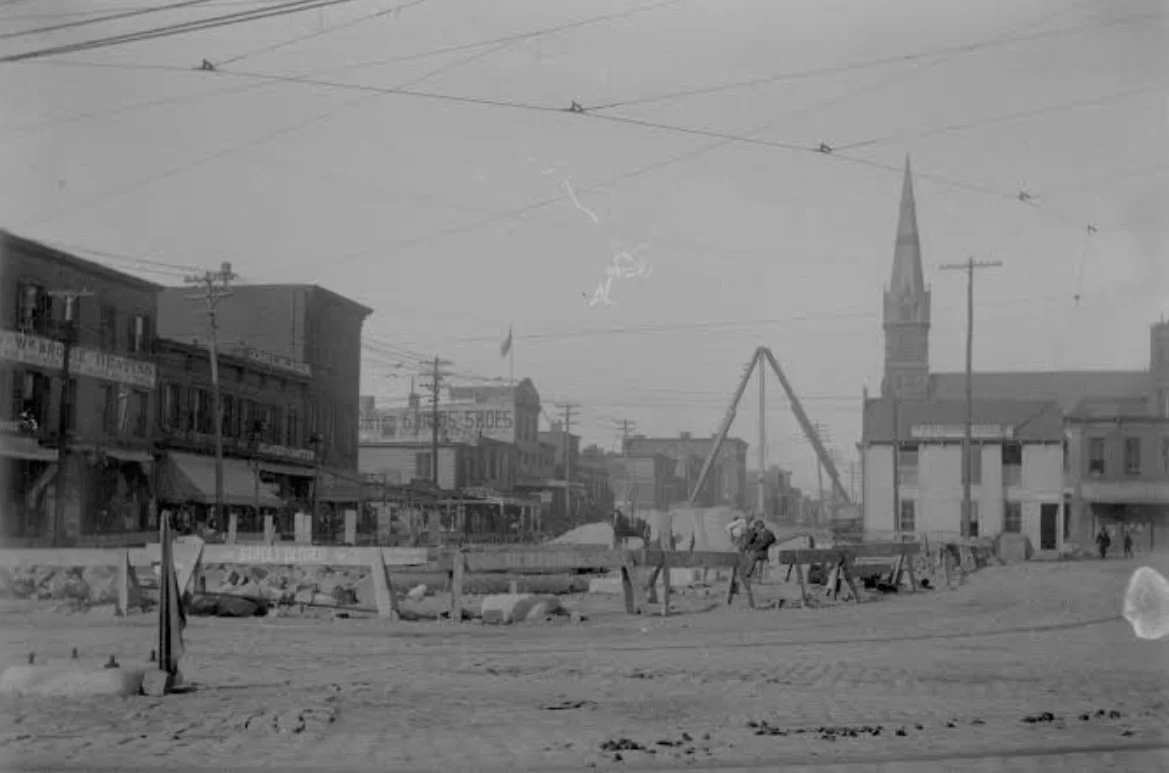
Hunter’s Point, Late 1800’s
A Rough Beginning
There are moments in history when the future begins not in grandeur, but at the margins: at ferry slips, in workshops, in borrowed rooms made sacred by purpose.
Such a place was Hunter’s Point in the spring of 1865.
The Civil War had only just ended. Lee had surrendered at Appomattox. The nation was emerging from catastrophe, bloodied but intact. Across the East River, in western Queens, Hunter’s Point stood on the edge of a different kind of transformation. It was not yet the Long Island City of factories, rail lines, apartment blocks, and towers. It was still part of the old town of Newtown: a rough patchwork of villages and hamlets; Astoria, Ravenswood, Dutch Kills, Maspeth, Blissville, and Newtown itself; of which only Astoria was incorporated.
This was a place of unpaved roads, scattered houses, little public lighting, few churches, and almost none of the institutions that make a community feel settled. Chroniclers would later remember “straggling houses and stores.” The ferries churned, industry began to clang, and the wind came hard off Newtown Creek.
It was here, at the old ferry house at the foot of Borden Avenue, that a small group of Master Masons decided to begin.
“Island City Lodge began at the water’s edge, in a place still rough with incompletion.”
On May 2, 1865, seventeen men signed an “Affiliation Agreement,” pledging that once a charter was secured, they would demit from their existing lodges and unite in a new one in Long Island City. They also agreed to assume personal responsibility for the first year’s rent on a lodge room.
The document is plain, practical, and quietly powerful. There is no grand language in it, no claim to destiny. Only signatures, obligations, and a promise. But institutions are often born exactly this way: through ordinary people willing to bind themselves to something larger than circumstance.
Among the leading figures were James Corwith, Jacob Rockwell, and Willet Ryder. Their petition was presented to the Grand Lodge, and in June 1865 a dispensation was granted. Corwith was named Master, Rockwell Senior Warden, and Henry Rudolph Junior Warden. The first meeting after the dispensation took place on August 22, 1865, in Ryder’s office in the Thirty-Fourth Street ferry house. On June 18, 1866, the charter was formally granted, and the lodge received its official name: Island City Lodge No. 586.
The name itself reflected ambition. The founders believed that when Long Island City was chartered by the state, it might be named “Island City.” It never was. But the name remained; a small monument to a hope larger than the facts on the ground,
“There was no grand rhetoric—only signatures, obligations, and a promise.”
Bare Floors, Steady Work
In its earliest phase, Island City Lodge met wherever it could. First in an upper room of the old ferry house, then in an office on what is now Borden Avenue, later in James Corwith’s carpenter shop on Vernon Avenue, and eventually in Smithsonian Hall.
These were not elegant quarters. Furniture was scarce. Proper lodge fittings were limited. In some cases, the brethren sat on planks laid across boxes. Floors were bare. By any normal standard, the surroundings were discouraging.
And yet the work went on.
Degrees were conferred. Officers were appointed. Charity was given. The ritual continued.
That is what gives these years their force. The lodge was not sustained by comfort, but by conviction. A lodge is not made by fine walls or polished furnishings. It is made by memory, discipline, fraternity, and shared labor. Those things Island City Lodge possessed from the beginning.
The early records also preserve the texture of daily life. In 1867, the Secretary was “directed to get some burning fluid.” In 1868, a brother was authorized to have the carpet shaken, at a cost not exceeding three dollars. The following year, the trustees were ordered to fasten the carpet down and put matting on the stairs. These details are small, but they reveal something real: a fraternity trying to make permanence out of modest means.
“The lodge was not sustained by comfort, but by conviction.”
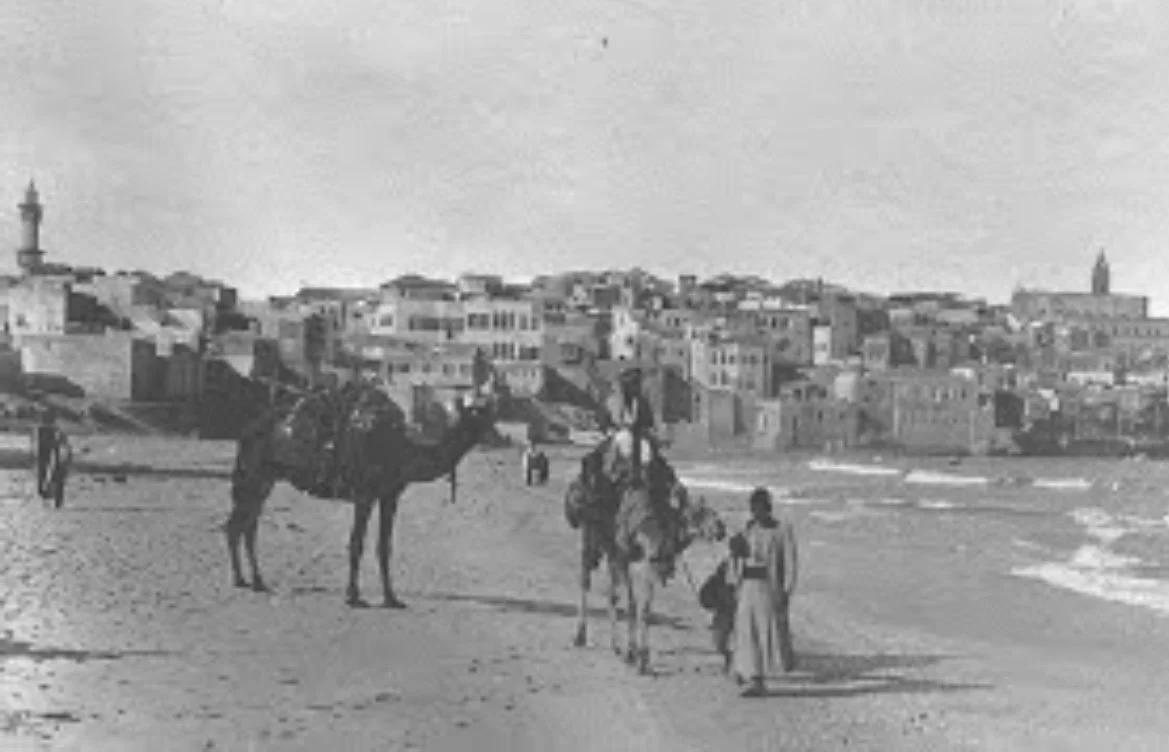
American Colony in Jaffa, Syria
Charity Beyond Its Walls
Even while the lodge struggled to establish itself, it gave outwardly. Donations were made not only to needy brethren, widows, and orphans, but to causes beyond its immediate obligations. In 1867, Island City Lodge contributed to sufferers in Mississippi, still devastated by the Civil War. It also sent aid to the American colony at Jaffa in Syria.
That matters. It suggests a lodge conscious not only of its own survival, but of a wider moral horizon. Materially, it had little. Spiritually, it was already practicing the habits that define an enduring institution: mutual aid, outward-looking charity, and duty beyond the room itself.
The first proposition for membership came in 1865, when John J. Wright, a blacksmith, was proposed. The first brother raised to the degree of Master Mason was James M. Whitcomb. The first death recorded was that of William Ogbourne, a charter member, who was buried with Masonic honors at Cypress Hills Cemetery.
The rhythm of lodge life was already established: initiation, labor, charity, remembrance.
“Materially, it had little. Spiritually, it already had the habits of an enduring institution.”
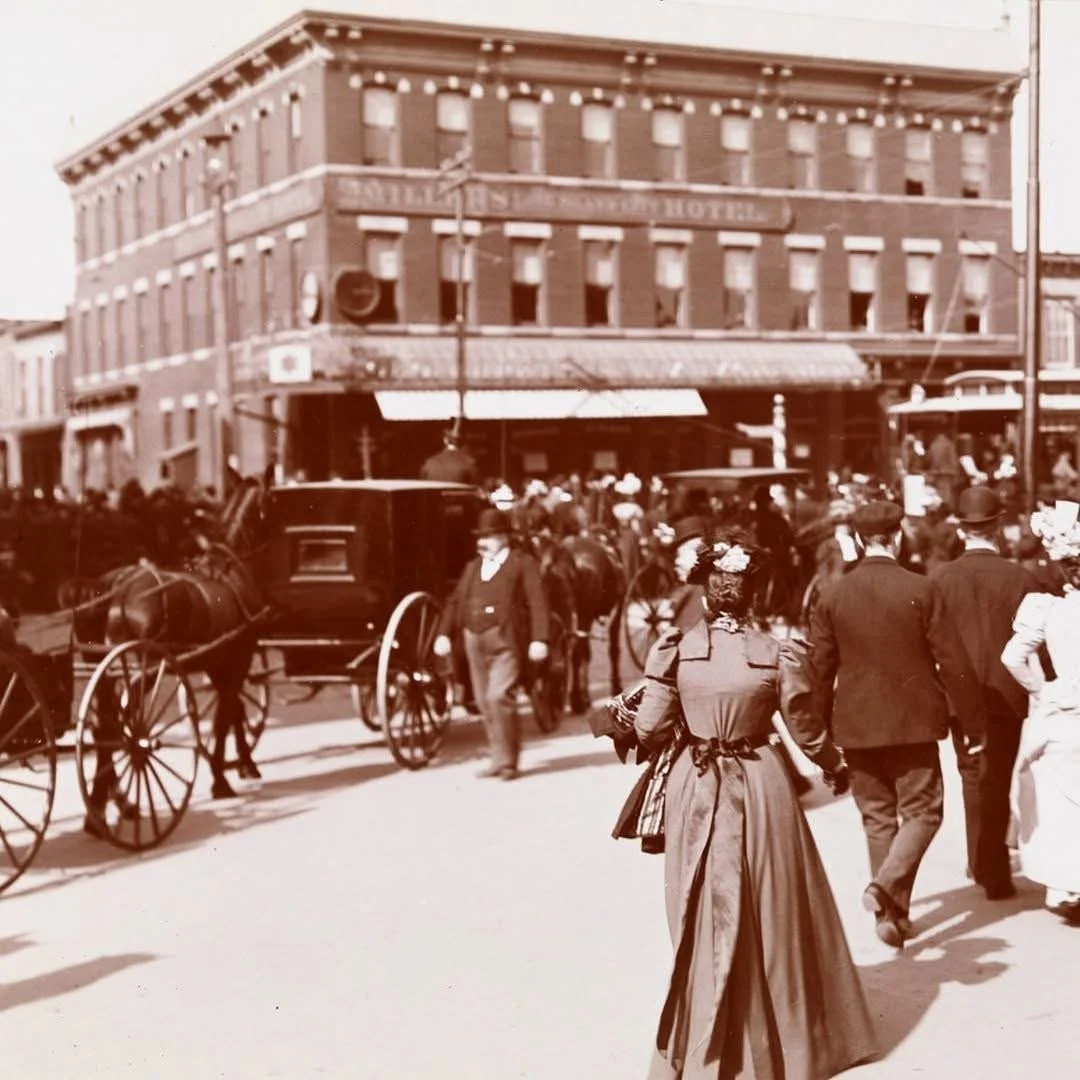
The Miller Hotel, LIC
A Night on Newtown Creek
One episode from the early 1880s survives with almost cinematic force.
A fraternal visit had been arranged with Bayonne Lodge of New Jersey. The visitors crossed by tugboat to Hunter’s Point on a bitter winter night. The Third Degree was conferred, and afterward the brethren gathered for a banquet at “Tony” Miller’s Hotel; music, speeches, laughter, warmth against the cold.
After midnight, the visitors made their way back toward the tug. There were no electric lights. The shoreline was dark and dangerous. In the confusion, William Dickson, Master of Island City Lodge, stepped too close to the unprotected edge of Vernon Avenue and plunged into the freezing waters of Newtown Creek.
He might easily have drowned. Instead, one of the Bayonne brethren, Alexander McGregor, without hesitation or reservation, leapt into the creek, fully clothed, and pulled him to safety.
McGregor later received a gold watch in recognition of his courage, and the bond between the two lodges endured. The story survives because it captures something essential: brotherhood here was not ornamental. It could demand real action, even real risk.
“Brotherhood here was not ornamental. It could demand real action.”
Growing With the City
As the decades passed, the world around Island City Lodge changed dramatically. Long Island City, incorporated in 1870, became one of the great industrial districts of the metropolis. Rail connections, ferries, foundries, docks, warehouses, and workshops multiplied. Streets were graded. Populations swelled. The shoreline hardened into infrastructure.
Island City Lodge grew with it.
From early on, it was woven into the wider development of Masonry in Queens. In 1866, it granted consent for the formation of Advance Lodge No. 635 in Astoria. In 1873, it participated in the institution of Mizpah Lodge No. 738 in Newtown, now Elmhurst, presenting it with a Holy Bible, Square, and Compasses.
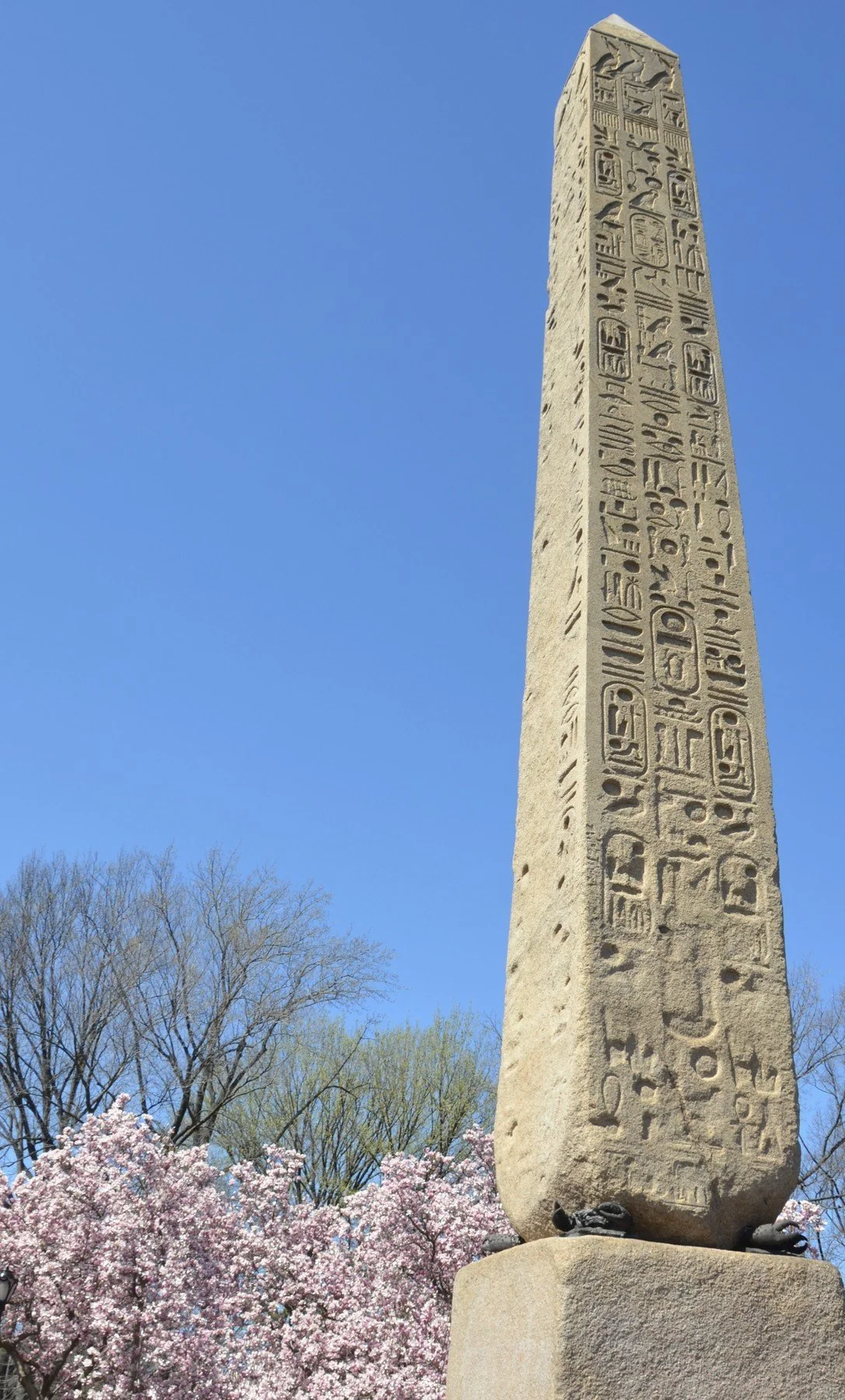
The lodge also took part in public ceremonies beyond Queens, including the dedication of the Masonic burial plot at Cypress Hills, the laying of the foundation stone of the Egyptian Obelisk in Central Park, and cornerstone ceremonies connected to Masonic institutions in Utica New York.
This was no longer a fragile neighborhood experiment. It had become part of the established civic and ceremonial life of the region.
“As Long Island City rose into an industrial powerhouse, the lodge rose with it.”
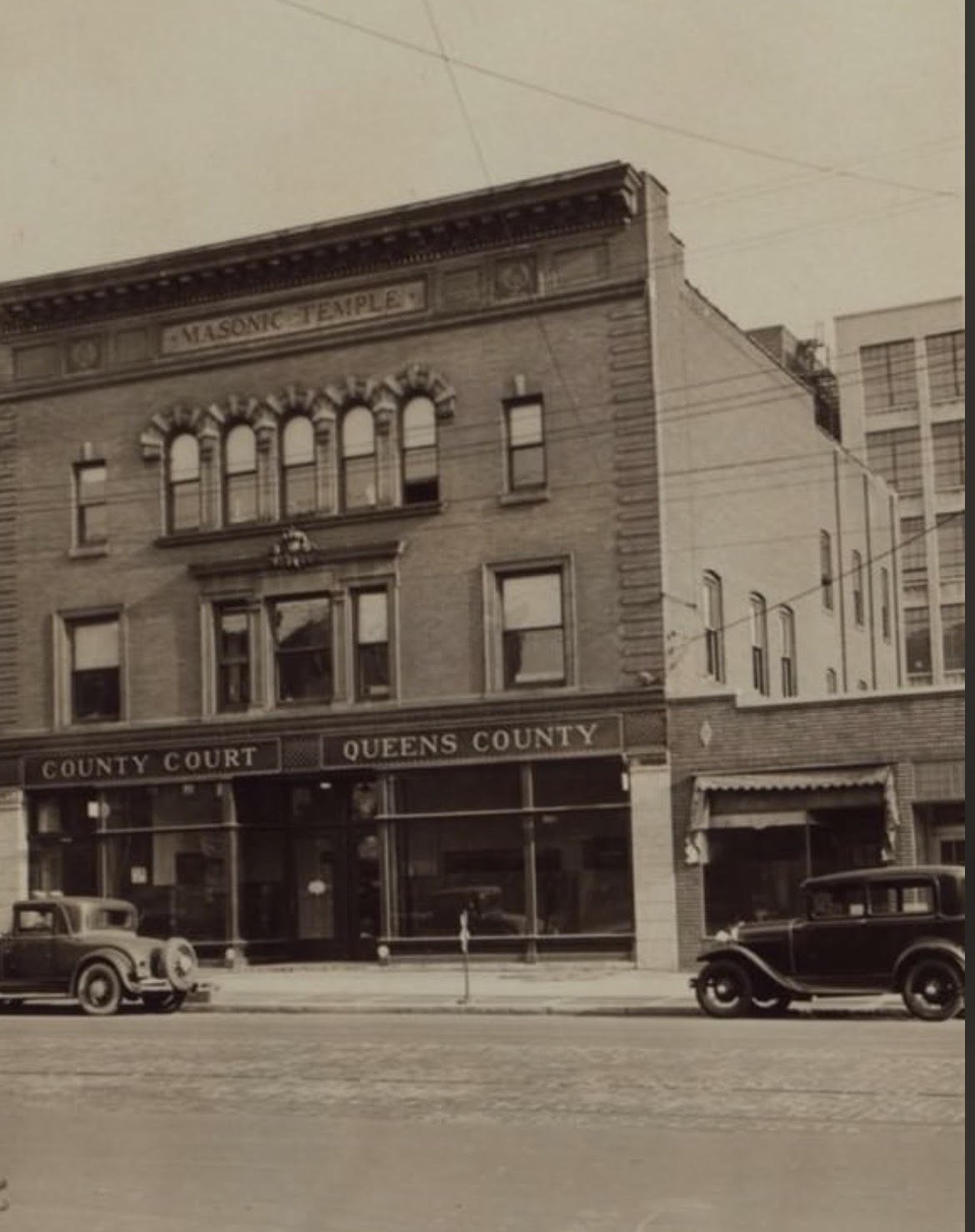
Island City Masonic Temple, 1932
A Temple of Its Own
By the turn of the twentieth century, Island City Lodge had matured into a stable institution. Then came the moment that most clearly symbolized how far it, and Long Island City itself, had traveled.
On September 8, 1906, in the presence of Grand Lodge officers, brethren, and citizens, the cornerstone was laid for a new temple on Jackson Avenue. In May 1907, the building was formally dedicated to Masonic use.
The symbolism was unmistakable. The lodge that had once met in ferry-house rooms, offices, and carpenter shops, now stood in a temple of its own. It was the material expression of forty years of perseverance.
The story of the lodge had begun in makeshift quarters at the water’s edge. Now it stood among the civic center, rooted in stone.
“From borrowed rooms to a temple of its own, the lodge mirrored the rise of Long Island City.”
Family and Fidelity
As the years passed, the lodge became not merely an institution, but a lineage. Fathers raised sons. Brothers raised brothers. In one remarkable communication in 1929, the Secretary, Treasurer, Tiler, and Marshal all raised sons or nephews on the same night.
Its charitable record also expanded. Over time, Island City Lodge supported the Boy Scouts, anti-tuberculosis efforts, hurricane and flood relief, the Red Cross, the Salvation Army, orphan homes, and the Warm Springs Foundation.
Few figures better embodied its continuity than Thomas H. Snedeker, raised in 1883 and honored in 1933 for fifty years of membership. He preserved the founders’ explanation of the lodge’s name and helped carry its memory forward. When he died in 1936, he represented something larger than a single man’s record: the long fidelity on which institutions depend.
“The lodge became not merely an institution, but a lineage.”
The Line Continues
Yet neither city nor lodge remains fixed. In 1938, as the geography of Queens shifted, Island City Lodge moved from its Jackson Avenue temple to Mizpah Temple in Elmhurst. In 1976, it formally consolidated with Mizpah Lodge; the very lodge it had helped institute more than a century earlier.
That was not simply an ending. It was a continuation.
Island City Lodge No. 586 began in the uncertain months after the Civil War, in a half-made settlement beside the ferry slips of Hunter’s Point. It endured makeshift rooms, grew with an industrial city, built a temple, sustained generations, and extended charity far beyond its walls. In doing so, it reflected a larger truth about Long Island City itself: communities are built not by steel and stone alone, but by memory, trust, ritual, and mutual aid.
At the water’s edge, in a place still rough with incompletion, they chose to build.
And in building themselves, they helped build the world around them.
“Communities are built not by steel and stone alone, but by memory, trust, ritual, and mutual aid.”
Related Articles
Island City Lodge Charter — Where the story begins
Island City Masonic Temple — The Court Square Temple
Advance Service Mizpah Lodge No. 586 — The Story continues here