Service Lodge No. 1009: History of a Queens Freemasonry Lodge
In the story of Queens Freemasonry, Service Lodge No. 1009 was more than a meeting place. It was a working fraternity: charitable without fanfare, social without shallowness, and deeply committed to the rituals, responsibilities, and relationships that gave Masonic life its meaning.
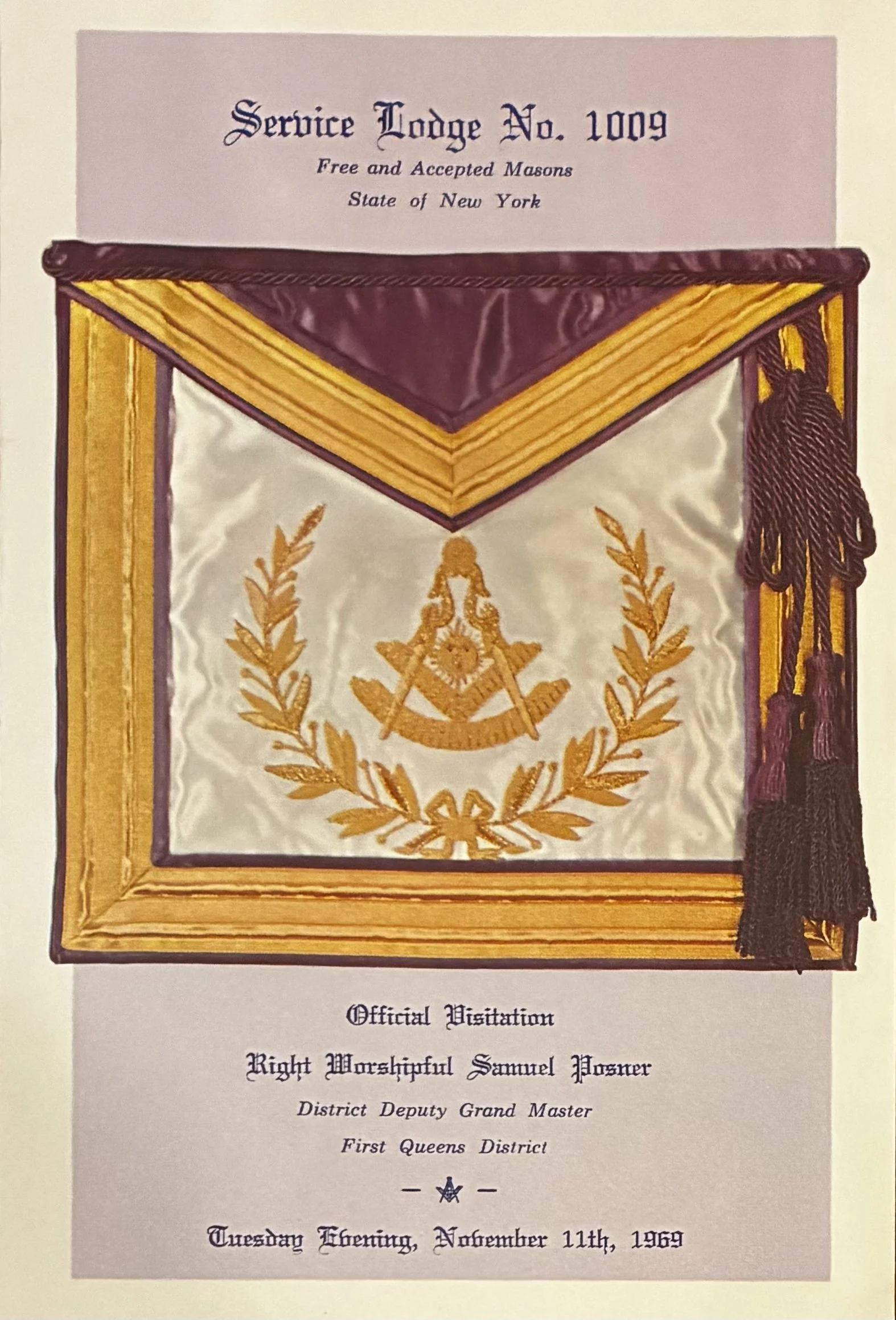
Long before “community engagement” became a modern slogan, Service Lodge No. 1009 was already practicing it in Queens. In ballrooms and lodge rooms, at charity events, degree nights, family dinners, and district gatherings, the lodge built a reputation that matched its name. Its surviving record reads less like the history of an institution than the life of a community: a network of brethren, families, traditions, and causes held together by loyalty, service, and the steady labor of men who believed showing up mattered.
A Lodge That Meant Business
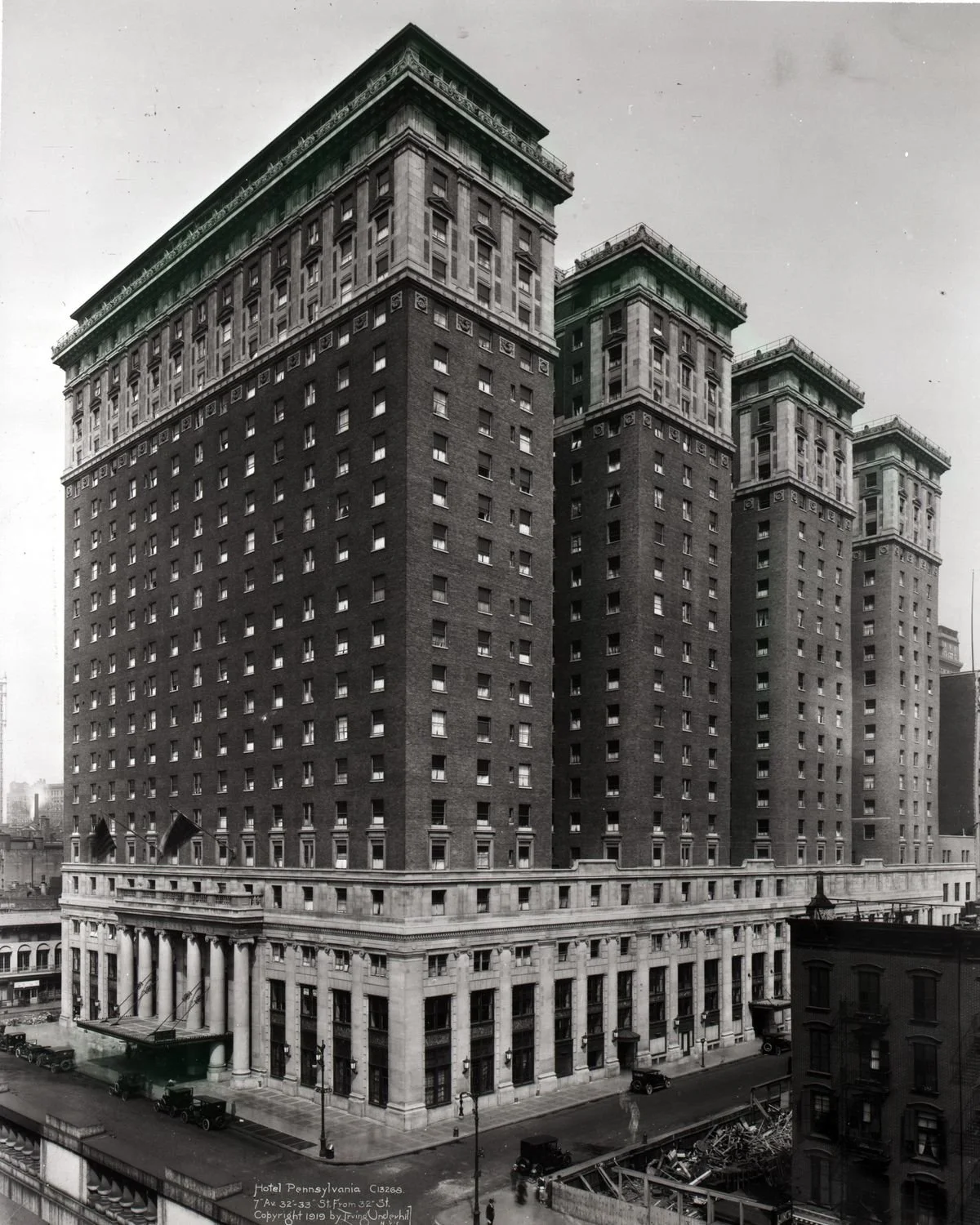
The Hotel Pensylvania
By the late 1920s, Service Lodge No. 1009 had already secured its place in the life of the First Queens Masonic District. A notice in the Brooklyn Eagle from November 23, 1929, documented the district’s sixth annual Masonic ball at the Hotel Pennsylvania, a major charitable event that drew 2,000 attendees. Among the participating lodges was Service Lodge, led at the time by Master Benjamin L. Shuter.
That detail may seem small, but it reveals something essential. Service Lodge was not an isolated body tucked away in its own routines. It was active, outward-facing, and fully engaged in the wider Masonic life of Queens. From early on, it moved comfortably in a culture of cooperation, ceremony, and public benevolence.
Charity Wasn’t an Accessory: It Was the Point
Again and again, the record returns to one central fact: Service Lodge gave. Not occasionally. Not symbolically. Consistently.
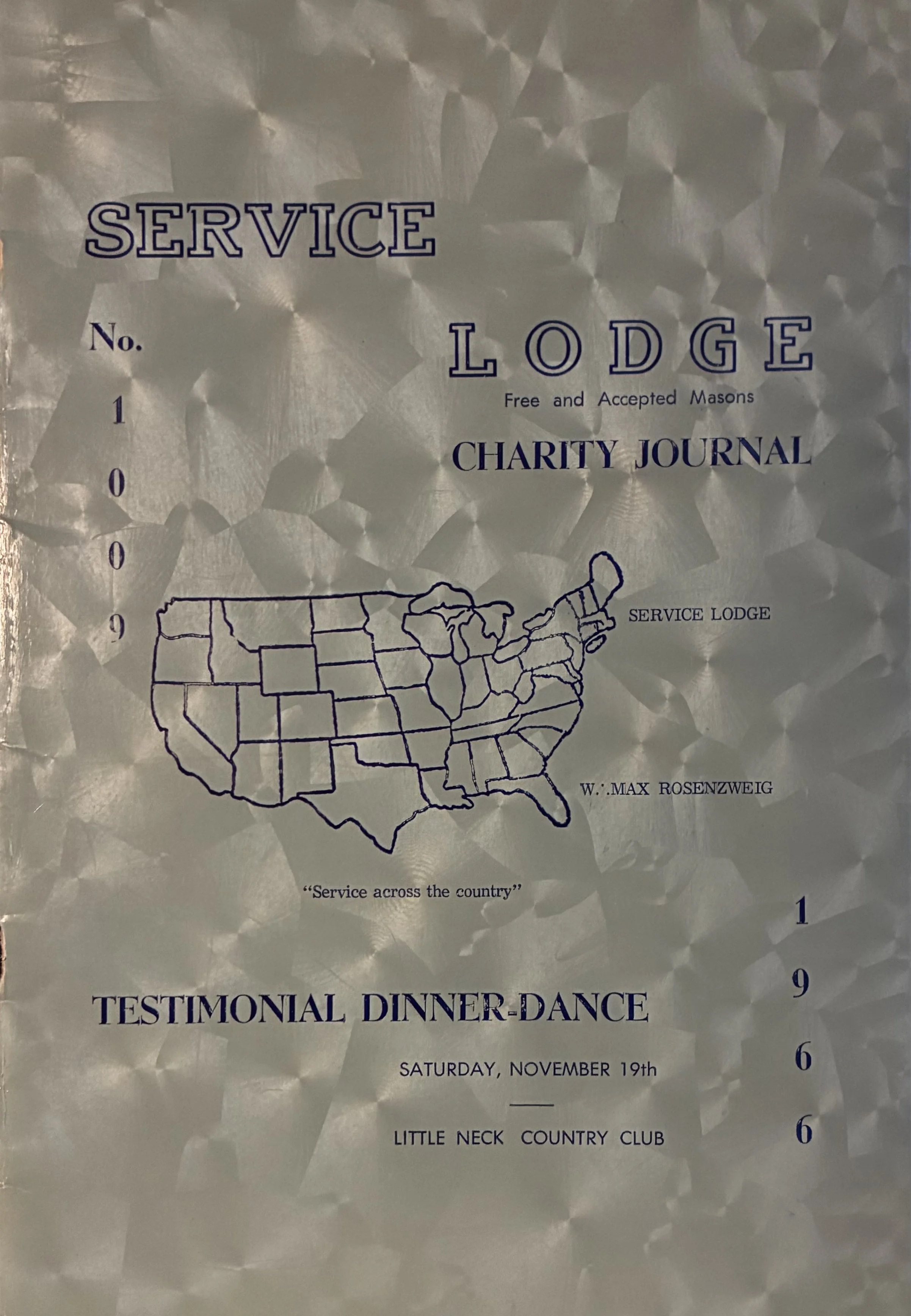
The annual district balls helped raise charitable funds, and by 1936 those efforts were supporting the Free Employment Bureau in Jamaica at a time when economic hardship still gripped many families. Later anniversary journals and lodge records show an even wider range of giving. Funds were directed to the Jewish Settlement House of the West Side, Camp Louemma, the Masonic Foundation for Medical Research and Human Welfare, and the lodge’s own Memorial Fund. Other donations went to hospitals, war veterans, Federation, United Jewish Appeal, and local temples and synagogues.
This was not narrow philanthropy. It was practical and humane, rooted in the life around the lodge. Service Lodge did not limit its sense of duty to Masonic circles alone. It gave where help was needed, and its generosity reflected a broad understanding of community responsibility.
The Work Inside the Lodge Room
For all its public spirit, Service Lodge was no mere social club with a charitable streak. It took Masonry seriously.
Communications from the early 1940s show a lodge attentive to ritual excellence, education, and fraternal duty. In a Master’s Message dated February 17, 1942, brethren were reminded of a moving address on the fate of Masonry in war-torn Europe and urged to uphold the ideals of the Craft. Members were encouraged to attend a First Degree exemplification, support ritual instruction, and bring other Masons back into lodge life.
These messages also carried the daily substance of a functioning lodge: district deputy visits, petitions awaiting ballot, brethren advancing through degrees, and notices of illness and distress. Service Lodge appears in these records as a living body; one that initiated candidates, trained officers, strengthened ritual work, and cared for its members.
That same spirit appears in a later anniversary account noting that in 1952 the lodge revived a Fellowcraft Team after a lapse of twenty-five years, restoring dramatic ritual work connected with the Master Mason Degree. That kind of revival does not happen in a sleepy institution. It happens where pride, energy, and commitment still run strong.
A Brotherhood Bigger Than One Lodge
Service Lodge thrived not only within its own walls, but in concert with other lodges across Queens.
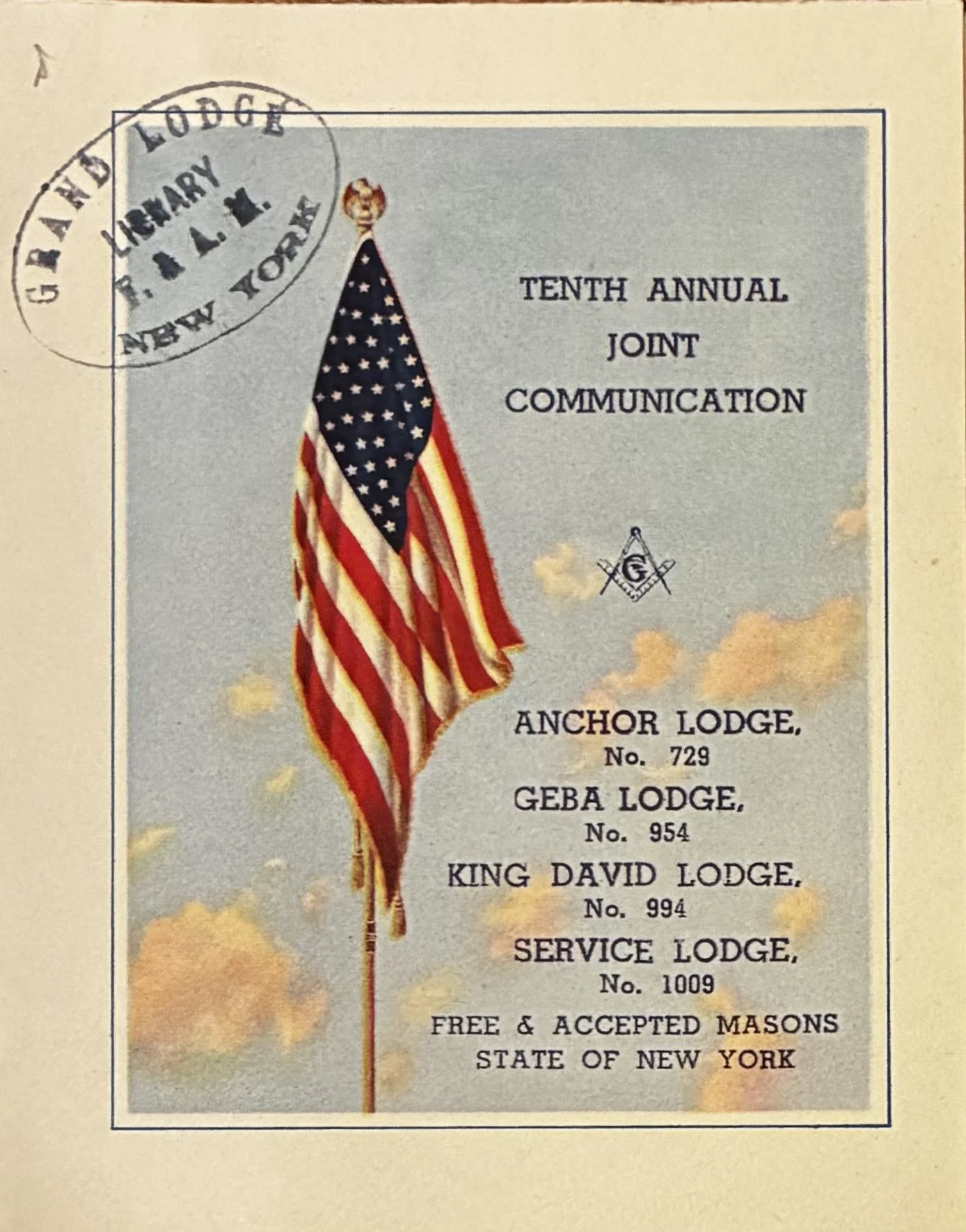
A 1946 invitation to the Tenth Annual Joint Communication placed Service Lodge alongside Anchor Lodge No. 729, Geba Lodge No. 954, and King David Lodge No. 994 at Mizpah Masonic Temple in Elmhurst. The program was rich with ceremonial and cultural life: delegations, presentation of colors, an invocation by Rabbi Abraham Dubin, vocal selections by Cantor Saul Kirschenbaum, and an address on “Masonry in War-Torn China.”
What emerges is a picture of Masonic culture at its best: formal but warm, rooted in tradition yet intellectually alive, local in setting yet expansive in outlook. Service Lodge was clearly at home in that world.
The same cooperative spirit carried forward into later decades. Notices from 1971 refer to the 36th Annual Joint Communication of Geba, Service, Brandeis, and King David Lodges, as well as a district-wide combined communication of all seventeen lodges of the First Queens District at the Holiday Inn near LaGuardia Airport. The language of those notices emphasized unity, friendship, and common purpose. Service Lodge was not merely present. It was part of the connective tissue.
The Men Who Made It Worthy
Institutions endure because people do. In the surviving materials, Service Lodge comes alive most clearly through the brethren who sustained it.
Benjamin L. Shuter appears in 1929 as Master during the great Queens charity ball. Bernard J. Manford is recorded in 1956 as Master during the homecoming of Right Worshipful George J. Gross, District Deputy Grand Master of the First Queens District. Harry H. Goebel described a flourishing lodge with nearly 400 members and active petitions for initiation and affiliation. Edwin Rosenfeld, writing in 1968, offered something rarer than a report: a glimpse of the lodge’s emotional life. His message spoke of continuity, friendship, and grief, marking the deaths of W. Sidney Ritter and W. David Dinnerstein while also recording the practical appointments needed to carry on the work.
That blend of feeling and responsibility says much about Service Lodge. It remembered its dead, but it also made sure the secretary’s desk was staffed, the treasurer’s work continued, and the institution held steady. Loyalty, here, was not abstract. It was administrative, emotional, and personal all at once.
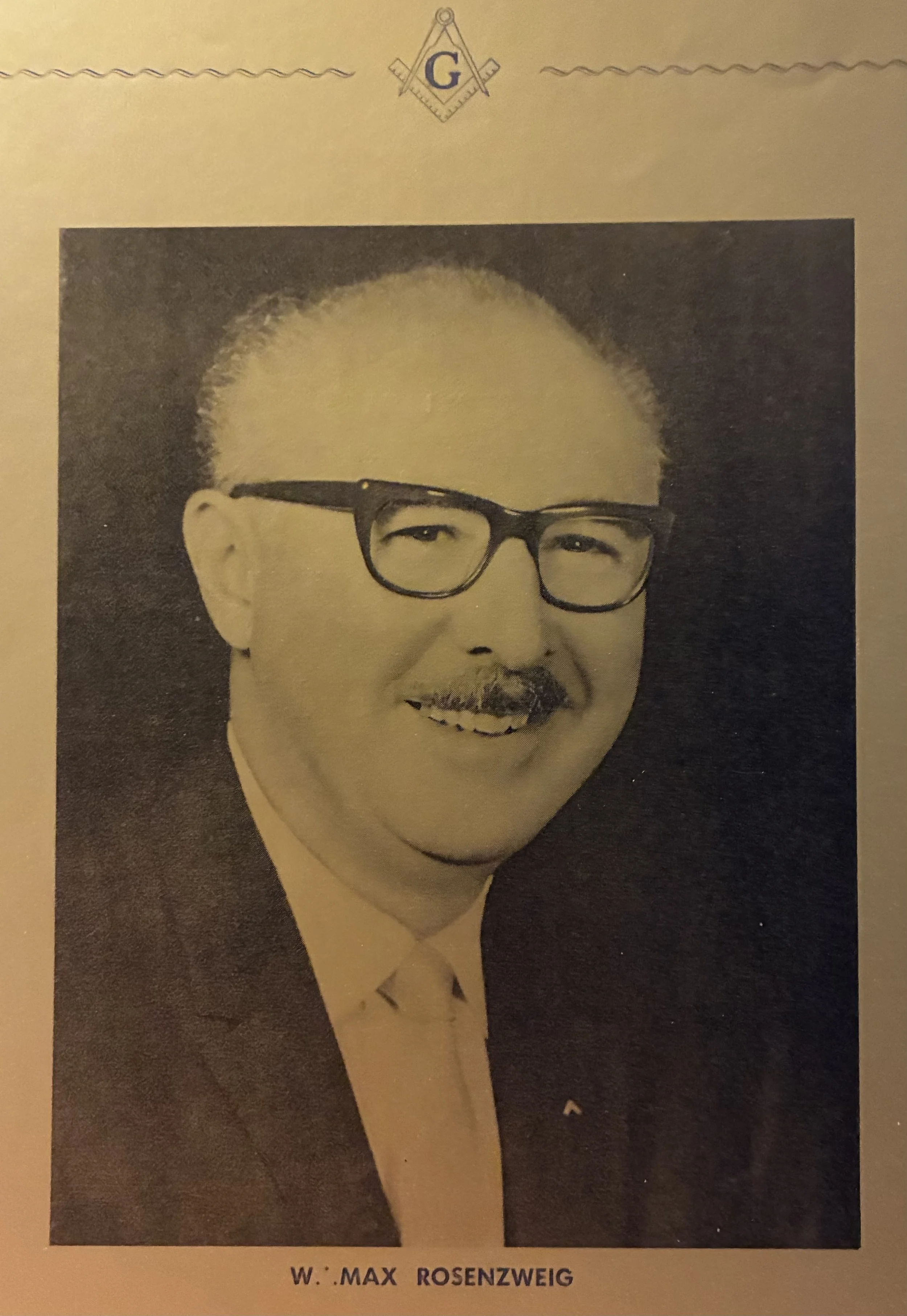
One figure who seems to embody the lodge’s ideals especially well is Max S. Rosenzweig. Raised in 1942 and serving as Master in 1949, he later became an Assistant Grand Lecturer and an active leader in Queens Masonic life. He was involved in Jewish communal service, belonged to Temple Gates of Prayer, and participated in bodies including the Scottish Rite and the American Lodge of Research. A testimonial written in his honor praised his devotion, selflessness, and steady support for new masters. In other words, he exemplified the sort of leadership Service Lodge valued most: quiet, durable, and generous.
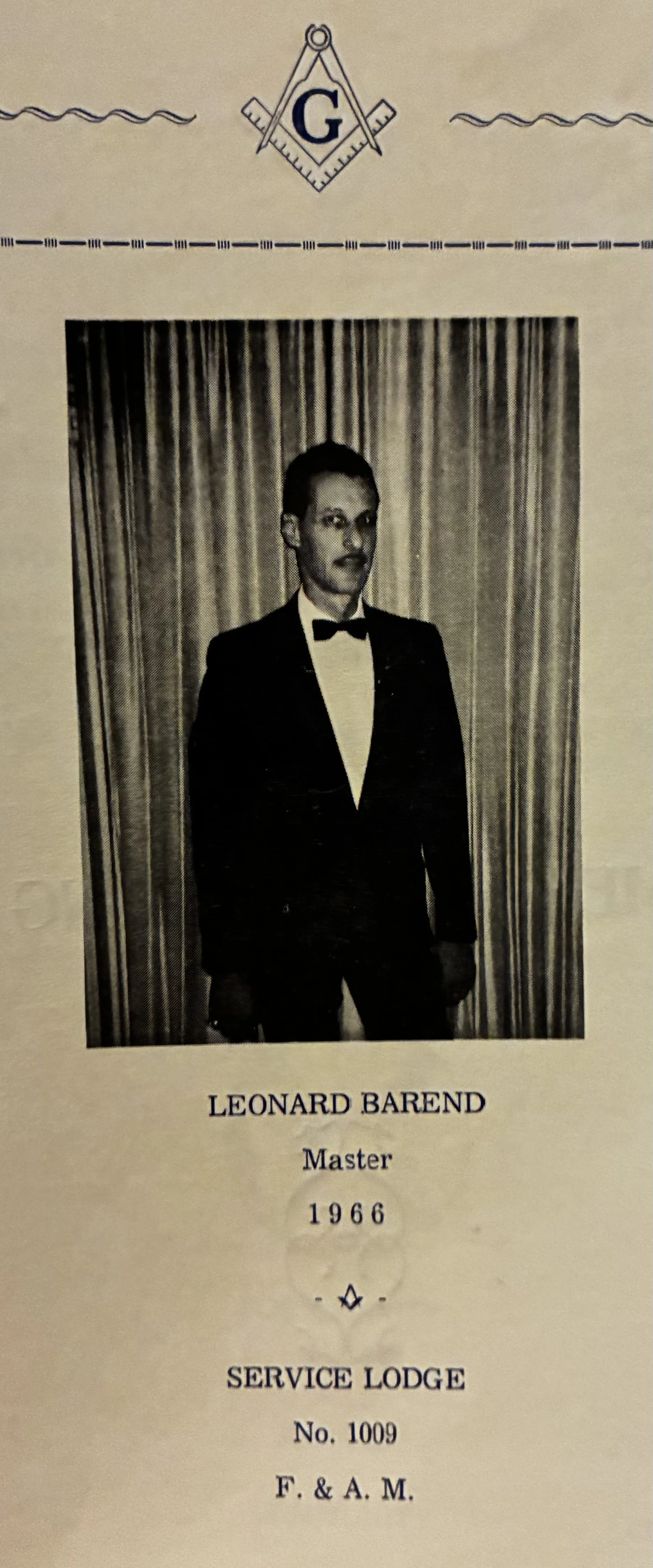
And then there are the many names that appear in committee work, event planning, ritual participation, and the social machinery of lodge life: Jack Bennis, Leonard Barend, Louis Hacker, Abe Tannenbaum, Joshua Makanoff, Ben Akulin, Ben Singer, Marty Swirsky, Bob Spear, Gail Gelb, and many more. Their names survive because they did the work that kept the lodge real.
More Than Meetings
One of the great pleasures of the surviving record is how vividly it captures the lodge’s social world. Service Lodge was serious, yes — but it was not solemn in the lifeless sense. It understood that fellowship had to be lived, not merely praised.
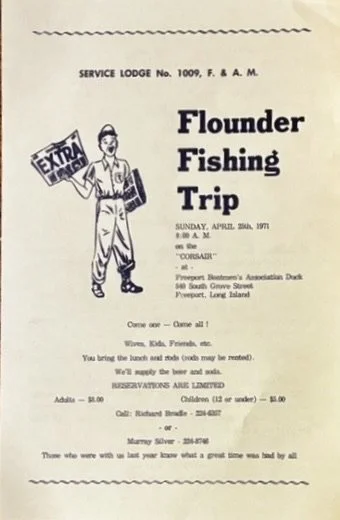
Its calendar included fishing trips, bowling leagues, raceway outings, ladies’ nights, anniversary dinners, and reunion evenings. A 1967 activities report affectionately described a summer fishing trip in which many participants ended up seasick while the hardier few had a wonderful day. Another notice celebrated summer bowling and planned a winter mixed league for brethren, wives, and friends.
This was not ornamental programming. It was a way of building durable bonds. The lodge made room for spouses, families, and friendships. It created occasions where men could know one another outside ritual formality, and where the life of the lodge could extend naturally into family memory.
A 1971 message from the East praised the success of Ladies Night and thanked a long roster of brethren and supporters for cooking, decorating, moving furniture, selling tickets, and managing the event. Read closely, it becomes a portrait of communal labor — cheerful, unglamorous, indispensable.
Perhaps most touching of all was a 1972 reunion invitation asking brethren to think back on how many years had passed since they first became Masons. They were invited not to donate, not to buy, not to sit through an appeal, but simply to return. There would be fellowship, recollection, a collation, and a gift. If the master under whom they had been raised was still living and nearby, he would be invited too. It is hard to imagine a more tender expression of institutional memory.
A Local Lodge With a Wider Horizon
Service Lodge was grounded in Queens, but it was never parochial.
During World War II, lodge messages took note of members entering the armed forces and offered prayers for their safe return. In 1946, the joint communication’s lecture on war-torn China signaled a continued awareness that Masonry — and the values it claimed to uphold; existed in a troubled international world.
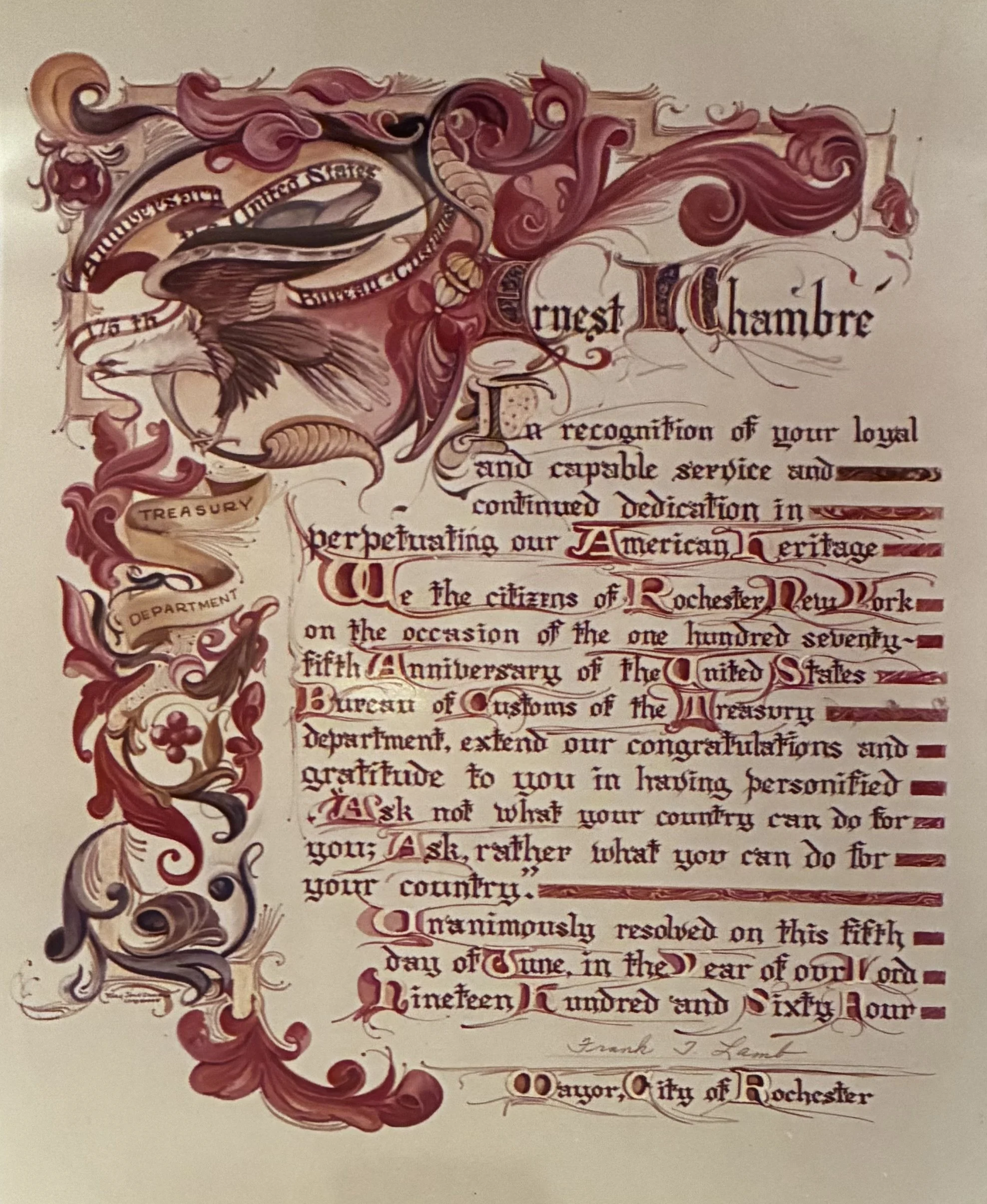
The career of Ernest L. Chambre suggests the same breadth of outlook in another register. A 1965 letter and a 1984 notice describe honors he received for preserving historic American Customs documents and helping present them to the public. Identified as an honorary “Conservator of Customs,” Chambre represented another side of the lodge’s culture: civic-minded, historically engaged, and useful beyond itself.
Ceremony, Memory, and Identity
Service Lodge also knew how to mark an occasion.
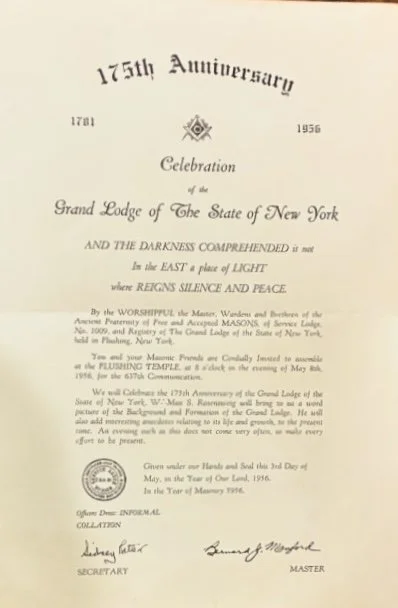
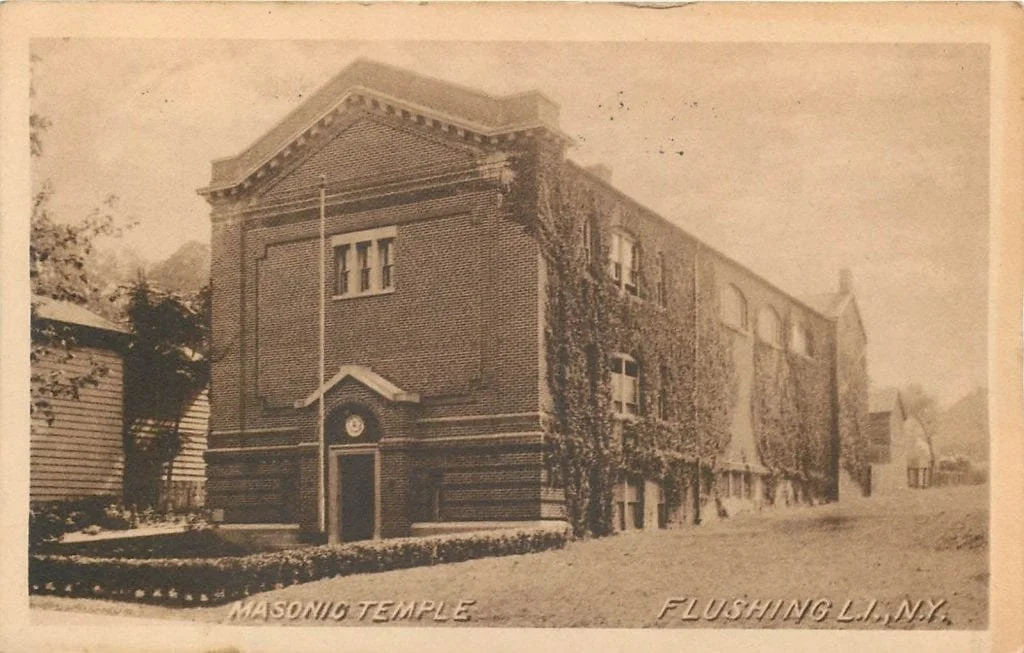
In 1956, it invited brethren and their friends to Flushing Temple for its 637th communication celebrating the 175th anniversary of the Grand Lodge of the State of New York. Max Rosenzweig was scheduled to present a “word picture” tracing the formation and growth of Grand Lodge through history and anecdote.
That phrase, word picture, feels especially apt. Service Lodge did not treat tradition as something dusty and remote. It animated it. It turned history into shared experience. Its ceremonies, anniversary events, and homecomings suggest a lodge that understood identity must be renewed if it is to remain meaningful.
A Name Earned
The surviving record suggests that Service Lodge enjoyed real strength in its middle decades. Membership rose into the hundreds. Petitions remained active. Past masters moved into broader district leadership. In 1955, when Cardoza Lodge No. 1150 was constituted in Bayside, a past master of Service Lodge, William K. Borow, was chosen to serve as its first master. That fact alone speaks volumes. Service Lodge was not simply preserving itself; it was helping shape the future of Queens Masonry.
And that, finally, is what made the lodge distinctive. “Service” was not just a title on a charter. It was a working philosophy. It meant service to Masonry through ritual, attendance, and instruction. Service to brethren through sympathy, continuity, and care. Service to the district through cooperation and leadership. Service to the community through charity. Service to family life through fellowship that was warm, organized, and enduring.
In the end, Service Lodge No. 1009 is remembered not because it was loud, but because it was reliable. It raised funds, trained officers, buried its dead, welcomed its guests, supported its district, and brought people back through the door. Its history lives in programs, notices, journals, and letters; but even more in the pattern they reveal: men doing the work, year after year, with seriousness, warmth, and pride. In Queens Freemasonry, that kind of legacy does not just deserve to be recorded. It deserves to be felt.
Related Articles
Service Lodge Charter and Notable Members — The men behind the legacy
Advance Service Mizpah Lodge No. 586 — The story continues here