The USS Advance and the Arctic Trial of Brotherhood
How a cargo brig became a vessel of transformatio, and why the story of the USS Advance still echoes within the fraternity.
The Grinnell Expeditions did more than chart the Arctic. They revealed the architecture of the human spirit under pressure, enacting, almost literally, the allegories Freemasonry has long preserved.
The Call

Lady Jane Franklin
Like Athena stirring Telemachus from stillness into purpose, Lady Jane Franklin’s plea moved the public imagination with quiet force. Grief became resolve. Resolve became action.
She had been Augusta; a workhorse brigantine built for trade. A vessel of iron and industry, hauling machinery across indifferent seas. There was no romance in her lines. She was utility made of wood and sail.
Then came the summons.
The Arctic demanded something different. The great clippers of the age, heavy with ornament, swollen with comfort, were unfit for the violence of ice. They were too rigid, too indulgent, too civilized to survive what lay ahead.
Henry Grinnell chose otherwise.
He chose a rough ashlar.
Augusta was stripped down to her essence. Metal removed. Weight shed. Masts shortened. Every unnecessary inch cut away. What remained was not elegance, but endurance.
She was invested with the instruments of survival: ice saws, ice anchors, reinforced structures that could be lifted, shifted, or sacrificed as needed. Her decks were enclosed against the killing wind. Her crew clothed not for appearance, but for survival.
Inside, she was equipped not for conquest, but for continuity. A library. Scientific instruments. Tools of navigation and thought. Kane appointed a physician, an astronomer, and observer; they would guide her not only by compass, but by intellect.
The crew were duly prepared to submit to labor, to discipline, to purpose beyond themselves.
Before she sailed north she was given a new name: Advance.
It was not cosmetic. It was consecration.
A passage from the ordinary into the charged; from the profane to the purposeful.
The Preparation
Kane’s men bound themselves to more than seamanship.
They obligated themselves to a stricter law: measured rations, controlled speech, restraint of temper, obedience to order, abstinence from alcohol, and fidelity when hope thinned to almost nothing. They understood that in such conditions, a man’s inner structure would matter more than his strength.
This would not be survival of the body alone.
It would be survival of consciousness.
The Descent
The Arctic did not welcome them. It absorbed them at Neptune’s whim.
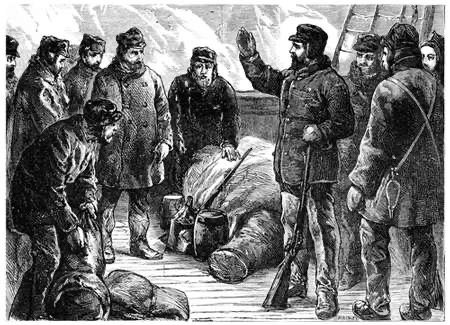
Kane on the deck of the Advance
Ice closed around the ship. Motion ceased. Time unraveled. Darkness fell and lingered beyond reason. The world became hostile not through aggression, but indifference.
This was not exploration. It was descent.
Every true voyage begins with departure from law.
The ship, once a vehicle, became a chamber. The expedition, once a mission, became a condition.
Civilization’s rules began to erode. Rank softened. Routine collapsed. Hunger replaced etiquette. Cold replaced reason. Isolation dissolved accountability.
The deeper they pressed, the more the fracture came from within.
Scurvy spread. Frostbite claimed flesh. Morale decayed. And then came the subtler threat: dissent.
William Godfrey and John Blake, capable, but volatile, became focal points of resistance. Not villains, but symptoms. They embodied what emerges in any closed system under strain: resentment, defiance, the refusal to yield to a greater order.
Kane understood the danger.
Not merely external, but internal.
His journals became acts of discipline: naming disorder, preserving meaning, holding a center that could not be seen but had to be maintained. He could not eliminate suffering. But he could orient it.
And in extremity, orientation is survival.
The Middle Work
Even in darkness, the work continued.
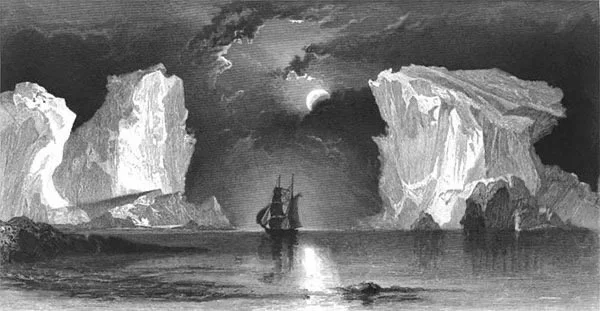
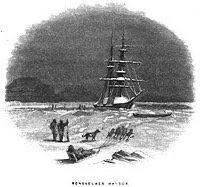
The Advance in the arctic
They Calculated and Measured their maps. They observed the celestial sphere by night, and the terrestrial sphere by day. Medicine fought decay. Language preserved memory.
They refused to let their minds freeze.
The Arctic could not be conquered by force. It could only be endured through disciplined perception.
And still, they descended.
Strange Wisdom
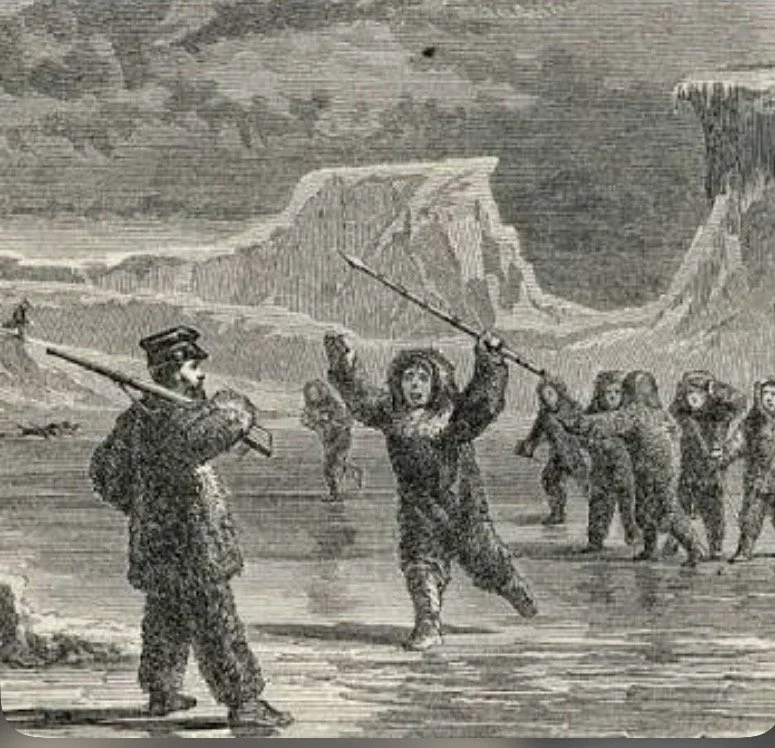
Kane greeted by Inuits
No expedition survives alone.
Their turning point came not from dominance, but from humility. Indigenous knowledge, hard-won, precise, adapted, revealed what they could not invent for themselves.
Mastery yielded to reception.
And in that yielding, survival became possible.
The White-Out
They were icebound for seasons.
The world narrowed to white and silence. Hunting parties moved across a landscape that offered little and demanded everything. Fuel came from what could be rendered. Shelter was improvised. The ship itself became both refuge and burden, groaning under the pressure of the ice.
They found abandoned dwellings; a reflection of how easily a life could end there.
USS Advance
Food was never certain. Seals were elusive. Walrus nearly impervious. Polar bears became both threat and necessity; their defeat hard-won, their presence constant. A sort of Nemean Lion of the north.
Kane’s observations on diet, recognizing the role of fresh meat in preventing scurvy, would immediately reshape exploration. But knowledge alone could not guarantee supply.
Time lost its structure. Days accumulated without progression. The future shrank.
Within the ship, tension sharpened.
Godfrey and Blake pushed further into defiance, feeding on the crew’s exhaustion. Theft, belligerence, insubordination. Their presence eroded cohesion at the very moment it was most needed.
At last, a faction broke away.
Led by Hayes, a small party attempted escape, chasing the faint possibility of rescue. Kane, holding command by force of will, restrained them from stripping the ship of what remained.
He watched them disappear into the white.
And remained.
A Light in the Dark
Trapped within ice and shadow, Kane turned to order.
With eighteen invalid men crammed in a space fit for ten, the ship had become a body in decline: air fouled, surfaces damp, illness spreading. He began to rework it, not as shelter, but as an instrument of recovery.
Silver photographic plates became mirrors, redirecting sunlight into the depths of the ship. Ventilation for the stove was engineered to rid the space of soot. Surfaces salted and dried. Space reorganized.
Light returned to the men who lay ill in the belly of the Advance.
Slowly, conditions shifted. Air moved. Dampness receded. Warmth, faint, but real, began to circulate.
And with it, something else.
Morale.
Health improved. Color returned to faces long drained. The men, though still confined, were no longer entirely consumed.
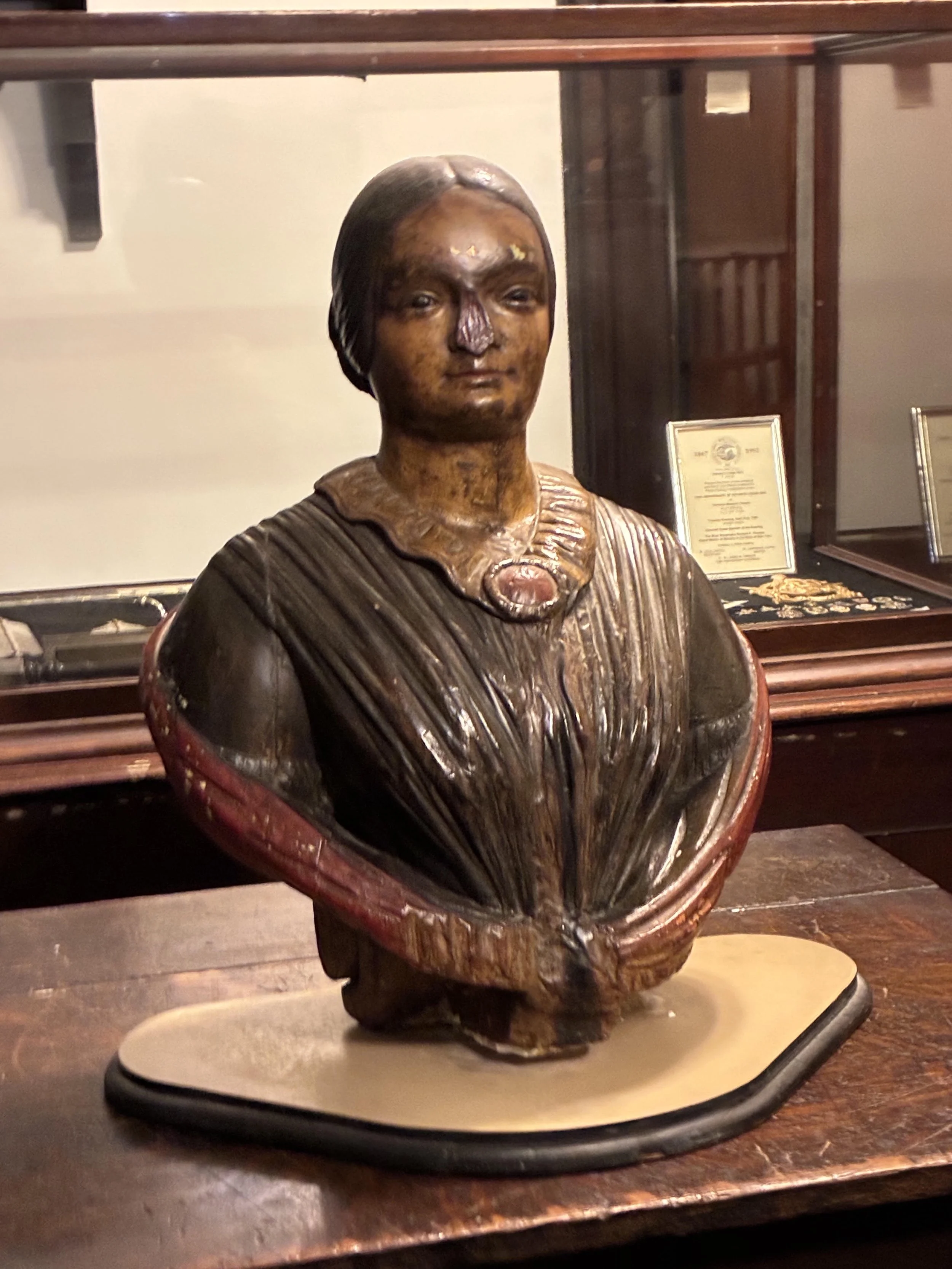
Augusta, The Cared masthead of the Advance
Then came another act of transformation.
At the bow remained the carved figure of Augusta; a remnant of the ship’s former life.
While the ship was being torn apart for material, Kane ordered it removed.
Not violently, but deliberately. Piece by piece, along its natural seams, until it came free intact. It was lowered to the deck and set aside; not discarded, but relinquished.
The ship stood changed.
Stripped now of even its memory of ornament.
The Return
When Hayes and his party returned, weakened and diminished, the contrast was stark.
Kane had changed as well.
Tempered. Controlled. Precise.
With the Advance no longer viable and the season beginning to turn, even the refuge of the ship would have to be sacrificed. Kane seized the moment. Health had improved. Spirits had steadied. Conditions, though still brutal, now allowed movement.
The mission shifted.
No longer northward.
South.
The Turn
Every expedition reaches its true purpose.
Not conquest.
Return.
Ambition gave way to obligation. The map surrendered to the men. Survival became the only meaningful victory.
This was not retreat; the expedition sacrificed glory for necessity.
It was fidelity.
Dissolution
They did not conquer the Arctic.
They endured it.

The Advance was lost; crushed, spent, transformed beyond recovery. What returned was not the same company that had departed. They came back altered: stripped of illusion, marked by ordeal, carrying something harder to name.
They were not merely survivors.
They were initiates.
The pattern is unmistakable.
The rough ashlar is not refined by comfort. It is shaped by pressure, by repetition, by force applied with purpose. Light is not given freely. It is approached through darkness, discipline, and submission to something greater than the self.
The Advance began as a common vessel.
It passed through confinement, darkness, fracture.
And what emerged was clarity.
Why It Endures
The Grinnell Expeditions are remembered not for triumph, but for truth.
A vessel called from ordinary use to higher purpose. Men placed in their stations. Tools fitted to labor. A descent into darkness. A threat from within. A fragile restoration of order.
Every principle was tested.
To govern oneself before attempting to govern others. To remain steady when fear overwhelms. To hold structure when structure dissolves.
The knowledge they carried back, medical, navigational, practical, changed future exploration.
But the deeper legacy is less tangible.
The Advance was more than a ship.
It was a lodge under pressure.
An alchemical vessel.
A human soul under trial.
The ice does not negotiate. It reveals.
What endured there was not strength alone, but order. Not dominance, but discipline. Not certainty, but fidelity.
The Arctic stripped everything away.
What remained was character.
The Raising
To survive such a voyage is not merely to live.
It is to return with proof.
That order can endure strain.
That leadership can hold through fracture.
That brotherhood can survive proximity to collapse.
And that meaning, real meaning, can persist even when comfort, certainty, and control are stripped away.
That was the true expedition.
Related Articles
Captain of Advance — Dr.Elisha Kent Kane
Explorer D B MacMillan — Letter to the Lodge
Notable Members of Advance Lodge No. 635 — The Men behind the legacy
Advance Lodge No. 635 — The full story of the lodge