A Façade of Guardians: The Entrance to the Advance Masonic Temple
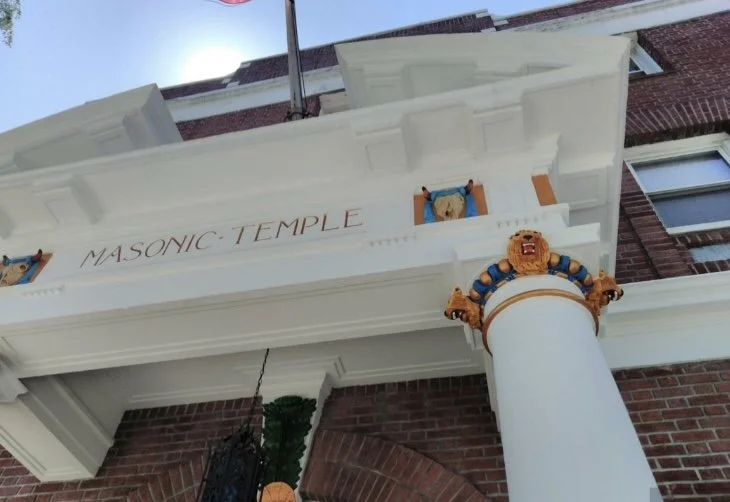
The façade of Advance Masonic Temple
Look up.
And once you begin to see it that way, the façade starts to read like a sentence written in stone; measured below, disciplined in the middle, and finally crowned with watchful guardians above.
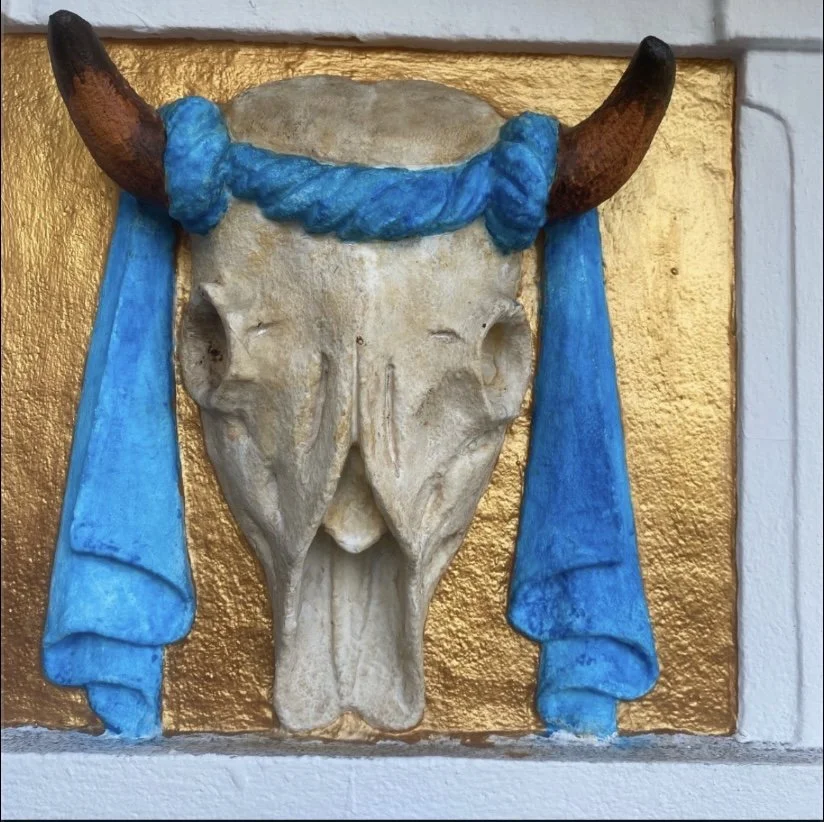
This post is the starting point for the series: the entrance as a whole, and the map to three specific details that belong together: the four lions above the columns, the egg-and-dart stone rhythm, and the bucranium above the door.
The Entrance as Architecture for Looking
The first thing the entrance does is organize your attention.
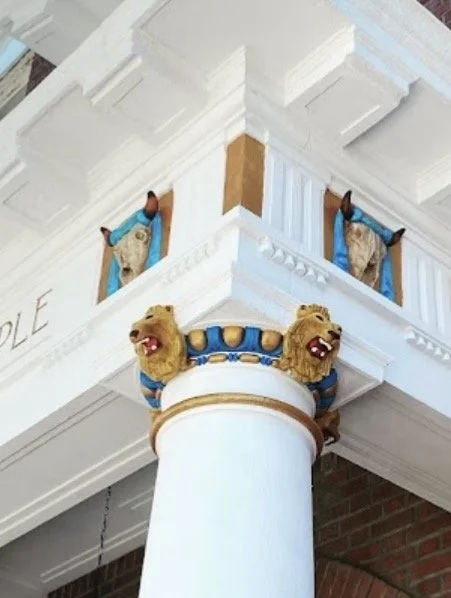
A column of the Advance Masonic Temple
Limestone trim and molding articulate the transitions between parts of the façade. They lift the composition from plain wall into readable structure, guiding the gaze as you move from the grounded base of the columns toward the lighter, higher details.
In older civic and ceremonial architecture, an entrance was never just a practical solution. It prepared visitors through proportion, contrast, and the careful placement of ornament. Here, that principle still holds.
A Classical Frame Built for the Upper Gaze
Look upward again, and you’ll notice how the building insists on a certain directionality.
That placement matters. It turns the façade from background into experience. The entrance doesn’t ask you to pass by quickly. It asks you to slow down; long enough to read the building’s language.
And that language concentrates in three places, each with its own emphasis, each strengthening the others as you follow the façade higher.
Three Details, One Entrance Language
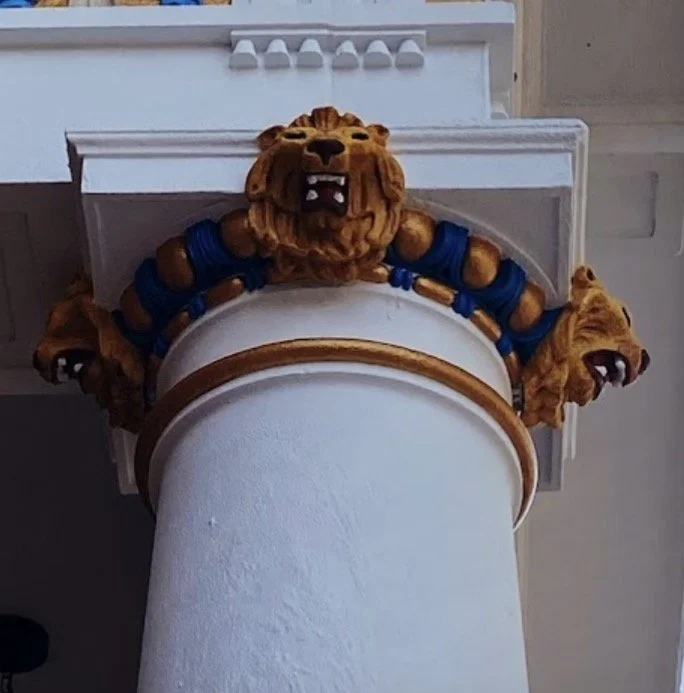
The Lions Above the Columns
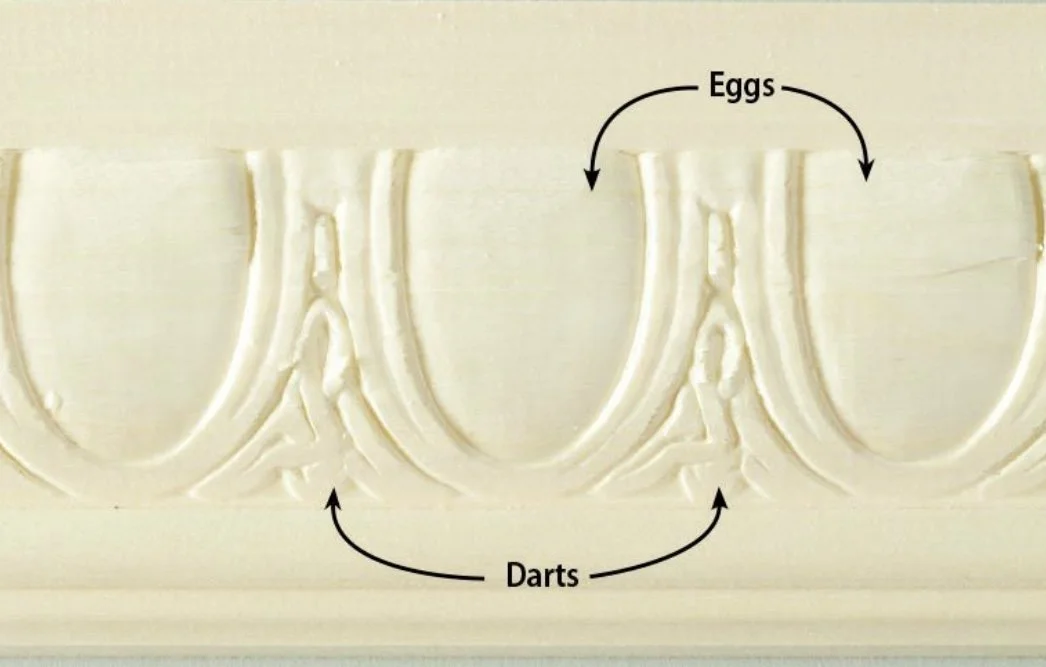
The Stone Rhythm Above the Columns (Egg-and-Dart)
The Skull Above the Door (Bucranium)
Why This Entrance Feels Ceremonial in the Middle of the Street
In a city defined by constant motion, the temple entrance holds stillness on purpose.
So start here: at the entrance as a whole.
Explore more from the entrance of Advance Masonic Temple:
Egg and Dart — A Classic Detail With Lassting Effect
Bucranium — A symbolic motif with deep decorative meaning
Stained Glass Windows — King Solomon and Hiram Abiff in color and light
Wooden Front Doors — Rich carving, bone handles, and Masonic symbolism
Why This Entrance Feels Ceremonial in the Middle of the Street
In a city defined by constant motion, the temple entrance holds stillness on purpose.
So start here: at the entrance as a whole.
Explore more from the entrance of Advance Masonic Temple:
Egg and Dart — A Classic Detail With Lassting Effect
Bucranium — A symbolic motif with deep decorative meaning
Stained Glass Windows — King Solomon and Hiram Abiff in color and light
Wooden Front Doors — Rich carving, bone handles, and Masonic symbolism