The Spiritual Meaning of the Skull
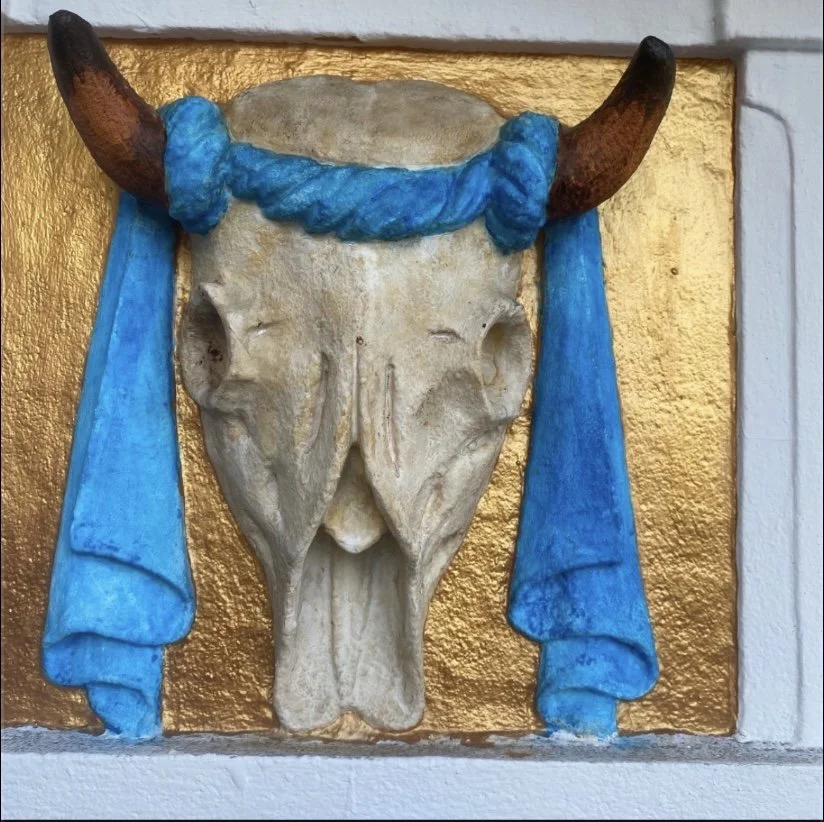
At the heart of the bucranium lies a paradox modern culture often resists: the recognition that spiritual life is inseparable from mortality.
A skull is what remains when vitality has passed. It is structure without softness, essence without adornment. But in ritual traditions, that remainder is not merely grim. It is clarifying. It strips away distraction. It asks what endures after display, appetite, and vanity have been burned off.
This is one reason the bucranium can feel spiritually potent even outside its original ancient setting. It speaks to an enduring human intuition: that consecration involves loss, and that loss can be meaningful. To offer something valuable is to acknowledge that not all value is material. To place the skull in architecture is to memorialize that truth in stone.
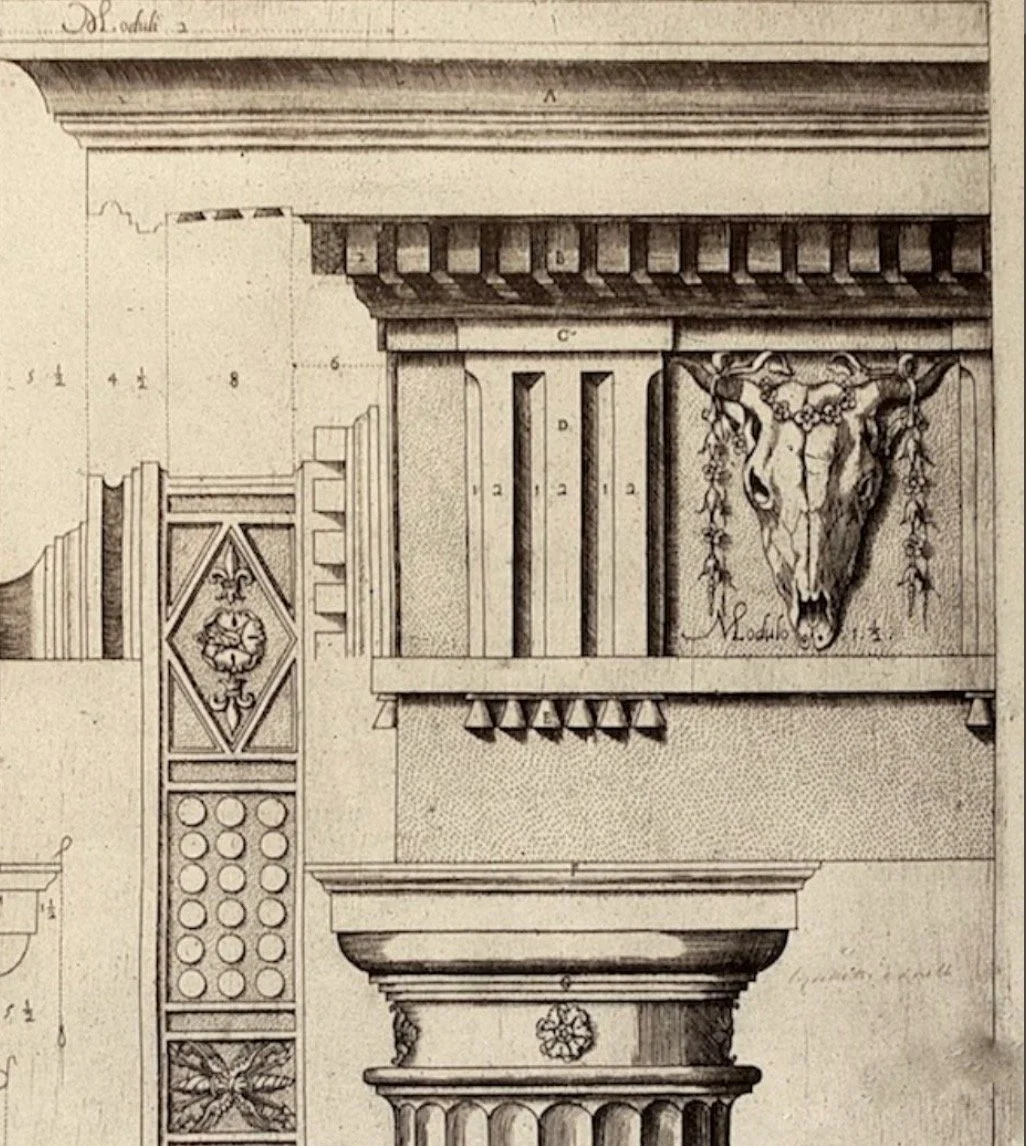
Yet the bucranium also resists nihilism. In classical art it is often paired with garlands, fruit, and vegetal swags. Bone and blossom. Skull and harvest. The message is not annihilation but transformation. Life is given, and life continues. Something ends, and something is sanctified.
That combination of austerity and abundance gives the motif its peculiar beauty. It does not flatter the viewer. It deepens them.
The Building as a Moral Text
There was a time when ordinary citizens were expected to read buildings the way we now read headlines: quickly, intuitively, with some grasp of the signs. A temple, courthouse, library, station, museum, or bank announced its purpose and values through massing, ornament, and sequence. Architecture served as a civic text.
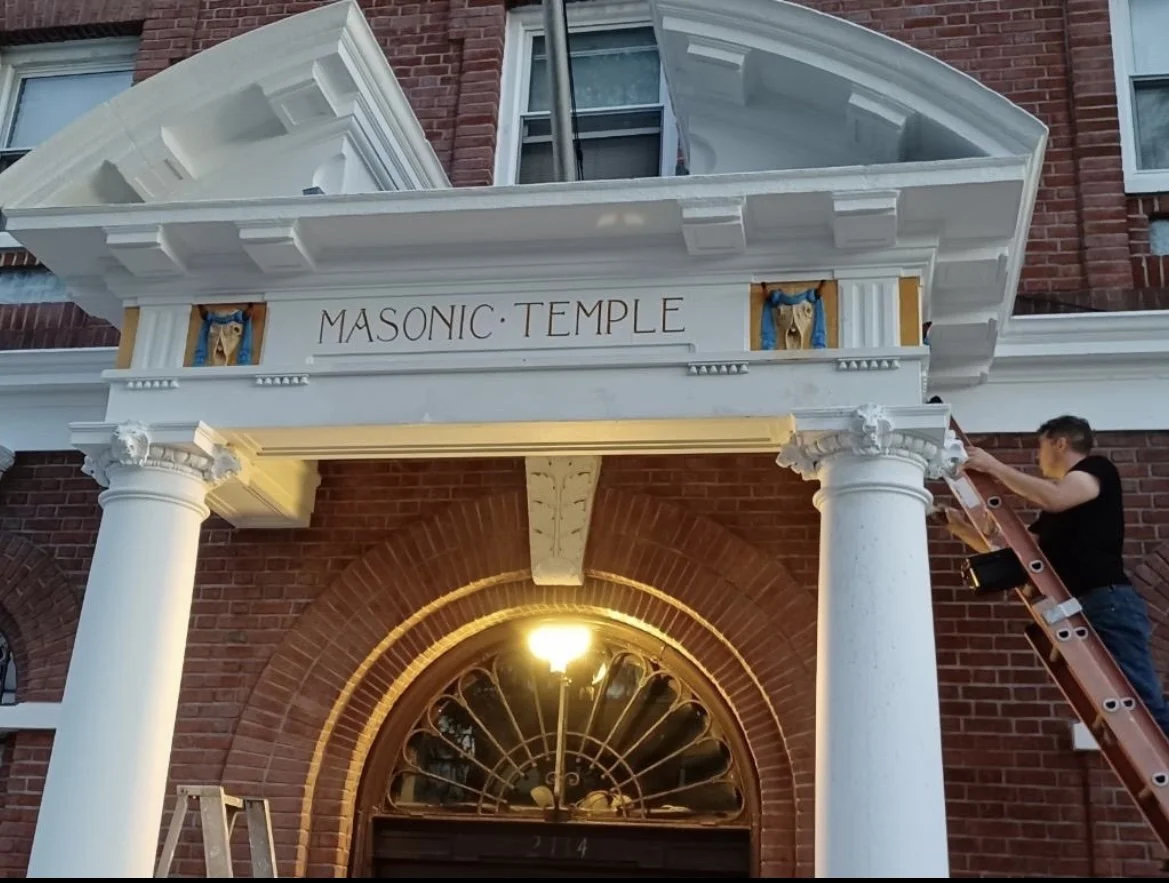
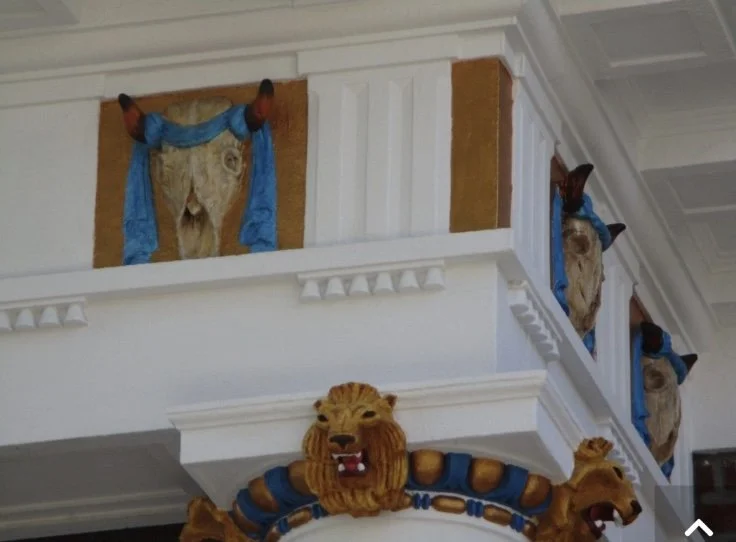
Lewis Mumford wrote, again and again, about the city as a theater of social life, a place where institutions should express collective values rather than mere technical efficiency. Read in that spirit, the bucranium on the Advance Masonic Temple is not an eccentric leftover. It is part of a larger civic ambition. It belongs to an era when buildings were asked to symbolize a moral order, not just provide usable square footage.
Today, many of us pass under such symbols without noticing them. But they remain there, weathering quietly, waiting for the upward glance. And when we do look, they restore a dimension of the city that never entirely vanished: the sense that architecture can carry memory, ethics, ritual, and aspiration in a single carved form.
What the Bucranium Still Says
So what is that skull above the temple in Astoria really saying
It is saying that this building was meant to be more than convenient.
It is saying that architecture once understood the threshold as a serious place, a point of passage where the street gives way to reflection.
It is saying that sacrifice, in the deepest human sense, is not barbaric but formative: to consecrate is to give something up for the sake of something higher.
It is saying that ornament can still think.
And perhaps, most movingly, it is saying that the old languages of architecture are not dead just because we have forgotten how to hear them. They are still with us in Queens, in limestone and shadow, in carved skulls and disciplined façades, asking us to slow down long enough to let the building speak.
Look up, and the temple tells you what kind of place it hopes to be.
Not merely a shelter for meetings, but a house of memory.
Not merely an institution, but a threshold.
Not merely a façade, but an argument in stone.
Explore more from the entrance of Advance Masonic TeExplore more from the entrance of Advance Masonic Temple:
Back To — The Entrance of Advance Masonic Temple
The Lions — The Architectural Guardians
Egg and Dart — A classic detail with lasting visual impact
Glass Windows — King Solomon and Hiram Abiff in color and light
Wooden Front Doors — Rich carving, bone handles, and Masonic symbolism.
Advance Masonic Temple — The Full Story