Egg-and-Dart: The Stone Rhythm Above the Columns
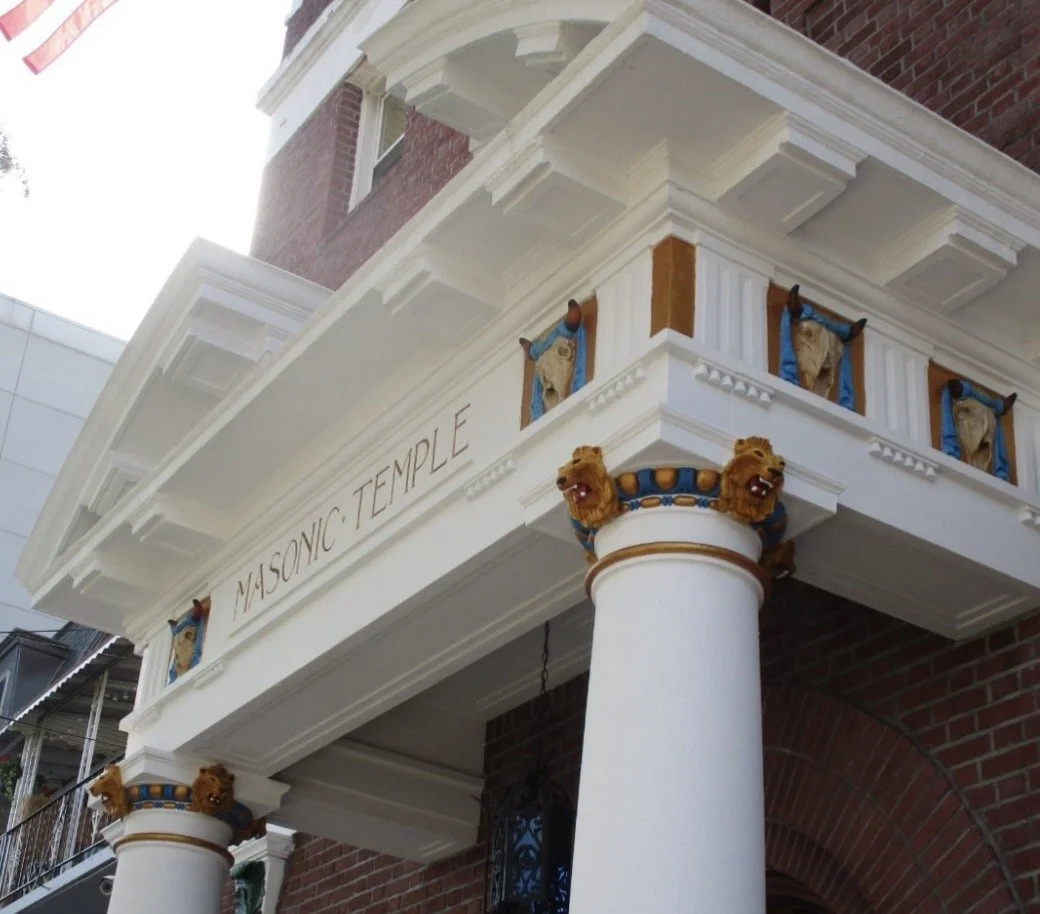
The façade of Advance Masonic Temple
Look up to the tops of the columns.
A Pattern Older Than the City
Its origins reach back to the architecture of the ancient Greek world, where ornament was never merely applied but integrated into a larger system of proportion, hierarchy, and symbolic order. The egg-and-dart pattern was especially suited to this world because it transformed repetition into refinement. It was geometric, but not mechanical. Organic, but not loose. Each unit answered the next. Each interval carried expectation. The result was a visual pulse, one that animated stone without disturbing its dignity.
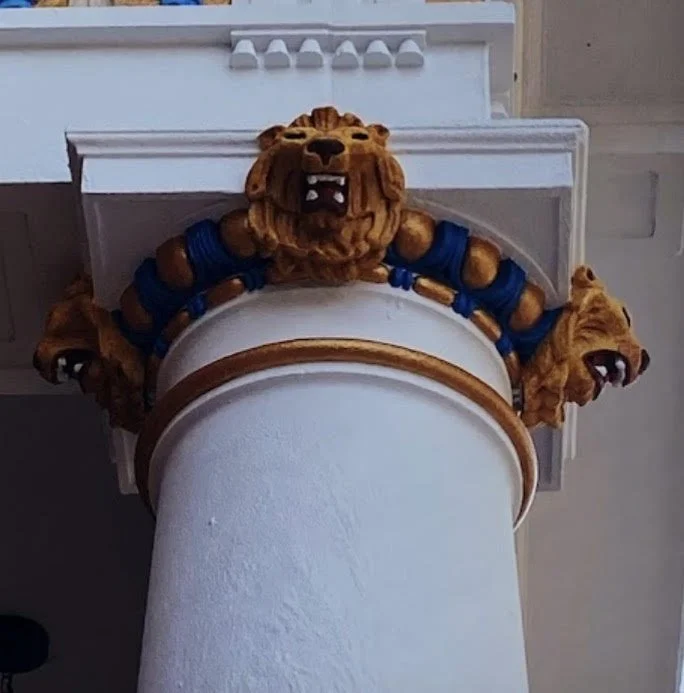
Column Capitol of Advance Masonic Temple
That rhythm mattered. Classical architecture did not rely on blankness for authority. It relied on articulation. It treated moldings, profiles, and carved transitions as ways of registering force, directing attention, and giving emotional texture to the meeting of vertical and horizontal elements. The egg-and-dart became part of that grammar because it gave architecture a sense of life at precisely the point where load, ornament, and perception converged.
Placed at the top of a column, the motif does not simply decorate. It marks a moment of transformation. The upward thrust of the shaft meets the spreading weight above. The column ceases to be only support and becomes expression. The stone pauses, gathers itself, and speaks.
Why This Pattern Endured
Architecture often depends on such pairings. Stability requires tension. Harmony requires contrast. Repetition only becomes meaningful when variation gives it edge. The egg-and-dart condenses that principle into ornament.
It also endures because it is deeply architectural in its effect. Unlike pictorial carvings that depict scenes or figures, the egg-and-dart does not distract the eye from the building’s form. It intensifies form. It sharpens the experience of edges, shadows, and transitions. In sunlight, its carved intervals catch and release brightness in a regular sequence. In overcast weather, it reads as a softer relief, a quieter texture. Either way, it makes the stone more responsive to time and atmosphere.
Good ornament does not simply sit on a building. It participates in light. It allows the façade to register the changing day. The egg-and-dart, with its alternating convex and pointed shapes, is especially adept at this. It creates a subtle vibration of shadow, giving the upper reaches of the column a delicacy that tempers the weight of masonry.
The Intelligence of Limestone
Material is important here.
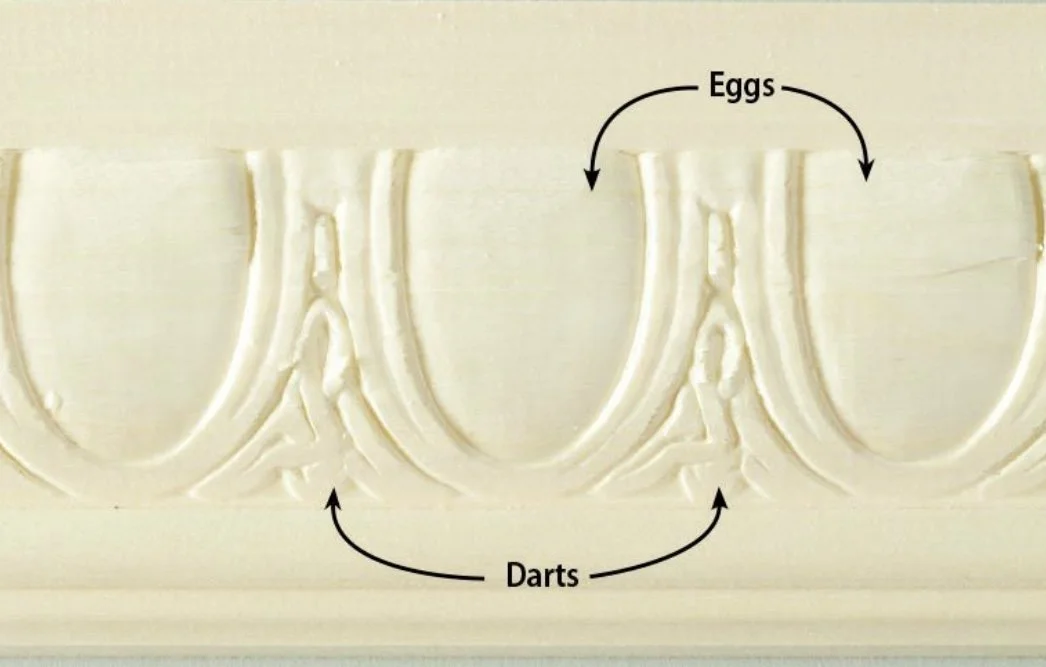
Egg-and-Dart
A motif like egg-and-dart needs exactly that balance. If rendered too sharply, it can become brittle. If too soft, it dissolves into vagueness. Limestone allows the pattern to remain legible while still belonging fully to the mass of the building. The relief is felt as part of the stone’s body, not something pasted onto it.
This is one of the forgotten pleasures of masonry architecture: ornament emerges from substance. The carving is not an image printed on a surface. It is matter shaped by labor. The chisel enters the stone, removes mass, and creates meaning through depth. What we see at the top of the columns is therefore not only a pattern but the trace of craft.
Why It Belongs on a Masonic Temple
In that setting, the egg-and-dart is entirely at home.
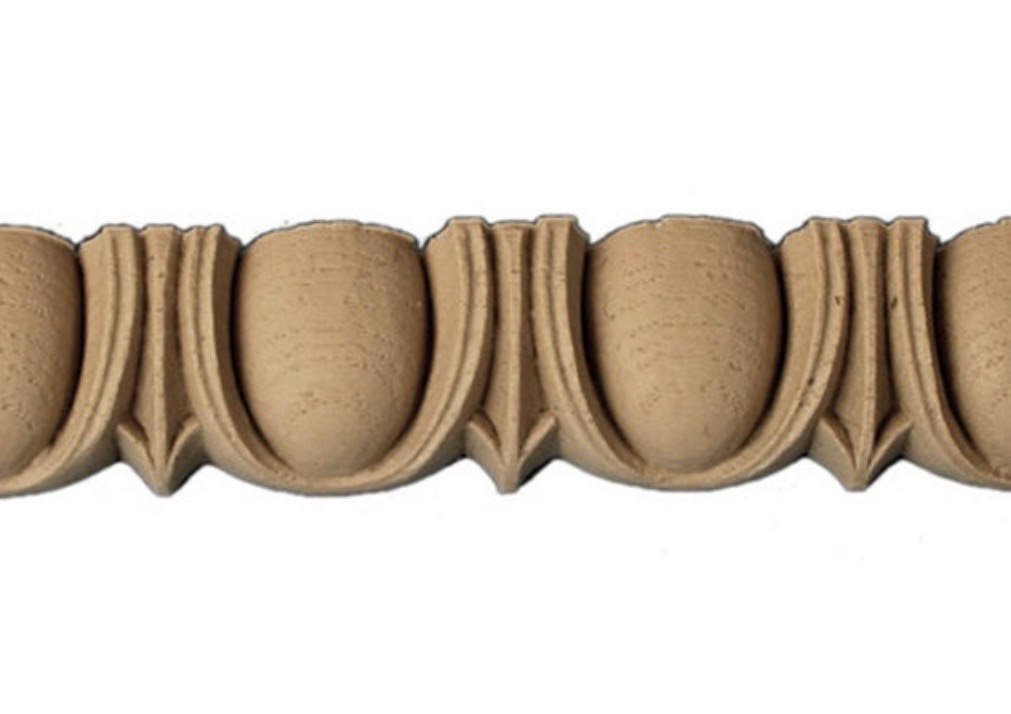
Egg-and-Dart
It is not a loud symbol. It does not announce itself like a crest or emblem. Instead, it works at the level of architectural temperament. It says that this building belongs to a world in which order matters, sequence matters, measured repetition matters. It suggests that beauty is not arbitrary, and that refinement is itself a form of seriousness.
That idea is deeply consonant with Masonic architecture. The shaping of stone, the discipline of form, the movement from the rough-hewn to the finished, the passage from confusion into proportion: these are recurring metaphors in the visual culture surrounding Freemasonry. The egg-and-dart, with its poise and restraint, participates in that moralized understanding of architecture. It is an ornament of order.
And yet it is not cold. Its repetition has warmth. Its regularity soothes rather than oppresses. It is strict, but alive. That balance between discipline and vitality may be one reason the motif remained so useful for ceremonial buildings.
Ornament as Discipline
There is nothing arbitrary about this pattern. Its repetition is controlled. Its spacing is measured. Its forms are calibrated to the scale of the capital and the larger composition of the façade. It belongs to a system in which each element relates to every other: base, shaft, capital, architrave, molding, cornice.
This is what older architecture knew instinctively: ornament can teach the eye how to move. It can prepare the viewer to perceive order. It can slow vision enough that form becomes legible as relation rather than mere mass. The egg-and-dart is a lesson in attention. It asks us to notice recurrence, difference, cadence, and pause.
Standing before the temple, you may not name the motif, but you feel its effect. The building seems more composed because of it. More settled. More exact. The ornament tunes the façade the way meter tunes language. It gives the architecture its measure.
Between the Street and the Sky
This placement is not incidental. Classical architecture reserves ornament for moments of significance: thresholds, capitals, cornices, transitions. The top of the column is one such moment. It is where upward movement meets the burden above, where the singular shaft joins the larger order of the entablature. To place a rhythmic relief there is to mark that joining as meaningful.
Explore more from the entrance of Advance Masonic Temple:
The Lions — The Architectural Guardians
Bucranium — A symbolic motif with deep decorative meaning
Stained Glass Windows — King Solomon and Hiram Abiff in color and light
Wooden Front Doors — Rich carving, bone handles, and Masonic symbolism.
Advance Masonic Temple — The Full Story