The Furniture Man and the Factory That Learned to Sing
Louis J. Viehmann built his career in the industrial world of Long Island City as a furniture executive, Mason and civic figure. Decades later, the factory tied to his name found an unexpected second life as a communal loft linked to the early history of Talking Heads.
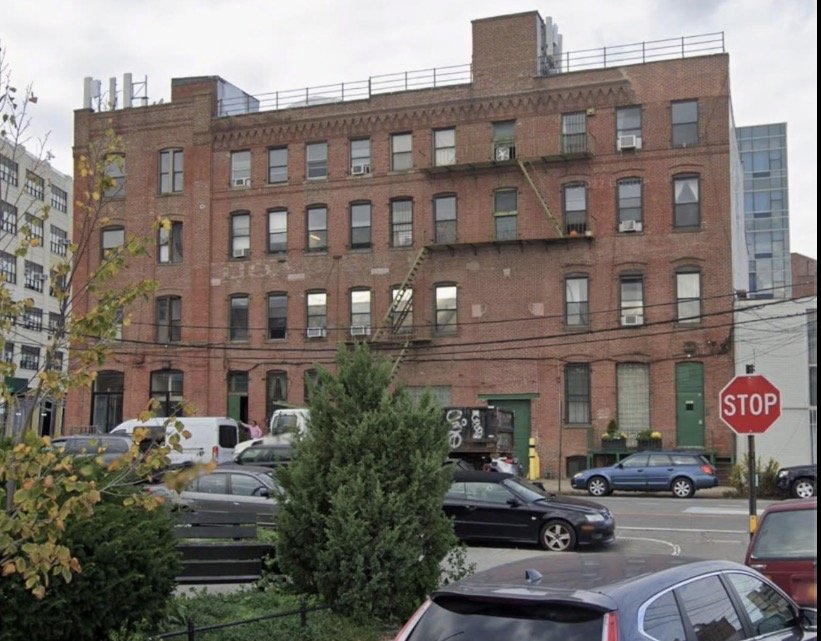
The former Teepe-Whitney Furniture Corporation building in Long Island City, later repurposed as artist lofts
Cities rarely erase themselves completely. More often, they layer one life over another until old buildings begin to hold several eras at once.
Long Island City is full of those layered stories. Before the towers, galleries and luxury rentals, it was a district of factories, freight and warehouse light — a place where things were made, shipped and sold with little fanfare.

Long Island City during its industrial peak, when factories and warehouses defined the neighborhood’s economy.
In that older Queens moved Louis J. Viehmann, a furniture executive whose life was rooted in work, fraternity and civic duty. He was not a famous man, but he was exactly the kind of local figure who helped give industrial New York its structure.
What makes his story especially striking is that one of the buildings tied to his career did not vanish with his era. It remained standing long enough to become part of a very different New York story — one involving artists, communal loft living and the early orbit of Talking Heads.
A Queens Life in Industry
Louis J. Viehmann was born in New York City, but his adult life was closely tied to Queens.
He lived in Astoria and East Elmhurst before settling in Douglaston in 1927, at 144 Centre Drive. The move suggests a familiar borough trajectory: a businessman whose success allowed him to move from the dense industrial neighborhoods of western Queens to a quieter residential setting, while still remaining closely connected to the business life of Long Island City.
By the time of his death in 1935, Viehmann was president of the Teepe-Whitney Furniture Corporation, located at Vernon Boulevard and 44th Drive in Long Island City.
The company manufactured chairs, tables and furniture novelties. It had been formally organized in 1926 to succeed the J. Chas. Teepe Company, which had moved from Manhattan to Long Island City in 1916. At the time, the firm reportedly employed between 75 and 100 men — a reminder of the scale and seriousness of the borough’s industrial economy in those years.
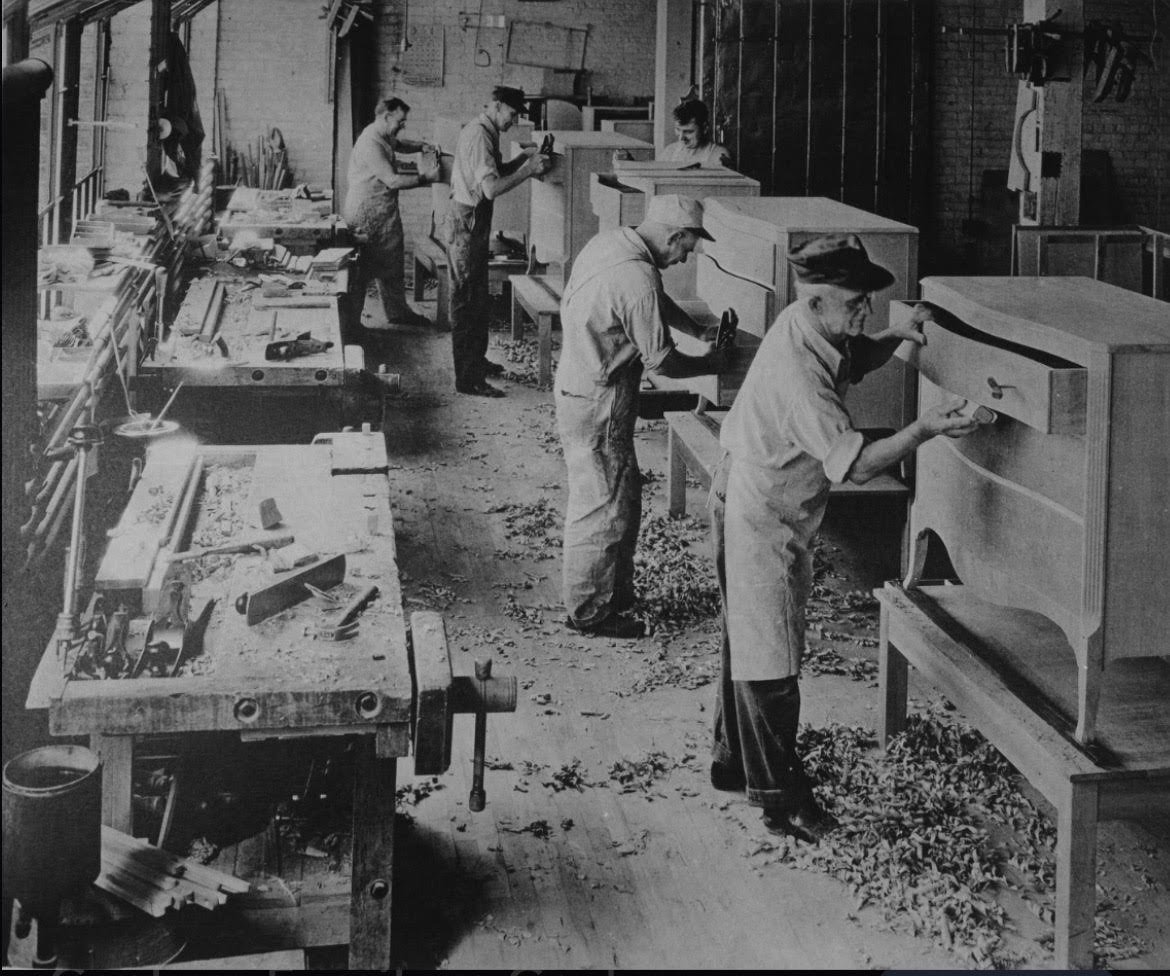
Furniture production in the early 20th century, reflecting the type of work carried out at Teepe-Whitney’s Long Island City factory.
Viehmann’s connection to the company was also personal. One obituary noted that the business had been founded by his father-in-law, linking him to the old New York pattern of family enterprise, where marriage and commerce often reinforced one another.
The Measure of a Local Man
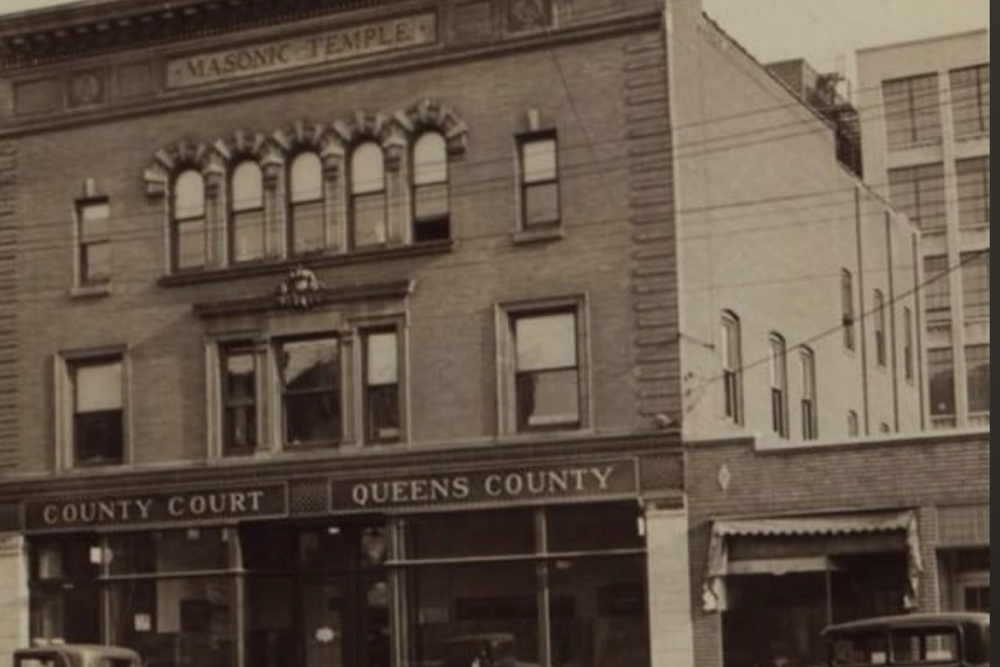
Masonic lodges played a central role in civic and social life for businessmen like Louis J. Viehmann.
Viehmann’s life was not defined by business alone.
He was a charter member of the Long Island City Masonic lodge, a distinction noted prominently at the time of his death. In that era, Masonic membership carried real social meaning. It spoke to standing, reliability and belonging.
He was also active in the Rotary Club of Queens Borough. In one directory, he appears with the simple nickname “Lou,” a small but revealing detail that cuts through the formality of old records.
His civic presence extended beyond clubs and fraternal life. In 1927, his name appeared among the industrial leaders supporting a fundraising campaign for the expansion of St. John’s Long Island City Hospital. That kind of work was part of the expected role of a successful local businessman. If you had influence, you were expected to put it to use.
Taken together, these details sketch a familiar early 20th-century type: the borough businessman whose identity was built not just in commerce, but in committees, lodges and local institutions.
A Sudden Death in 1935
On May 21, 1935, Louis J. Viehmann died suddenly in Manhattan. He was 51.
Newspapers reported that he suffered an apparent heart attack at the Railroad YMCA on East 47th Street. He had been staying there while his wife and children were away at the family’s summer home in upstate New York.
The scene feels unexpectedly intimate: a well-established Queens businessman, temporarily living out of a room in Manhattan, cut down in the middle of ordinary life.
He left behind his wife, Augusta, née Teepe; daughters Anna and Muriel; son Jack; a brother, John C. Viehmann; and a sister, Katherine Barber of Colorado Springs.
Masonic rites were held in Flushing. He was later buried in Greenwood Cemetery.
The Building That Outlived Its Era
For most people, the documentary trail ends there.
But the story of the Teepe-Whitney building did not.
The former factory at 9-01 44th Drive survived the decline of the industrial world that had once sustained it. As manufacturing receded from western Queens, old factory buildings began to take on new uses. Some became artist spaces. Some became lofts. Some became communal living environments shaped by the city’s shifting creative culture.
By the mid-1970s, the old Teepe-Whitney building had entered that second life.
Among the people who lived there were Tina Weymouth and Chris Frantz, future members of Talking Heads. They moved into the loft in November 1974, and in 1977 they were married in the building itself.
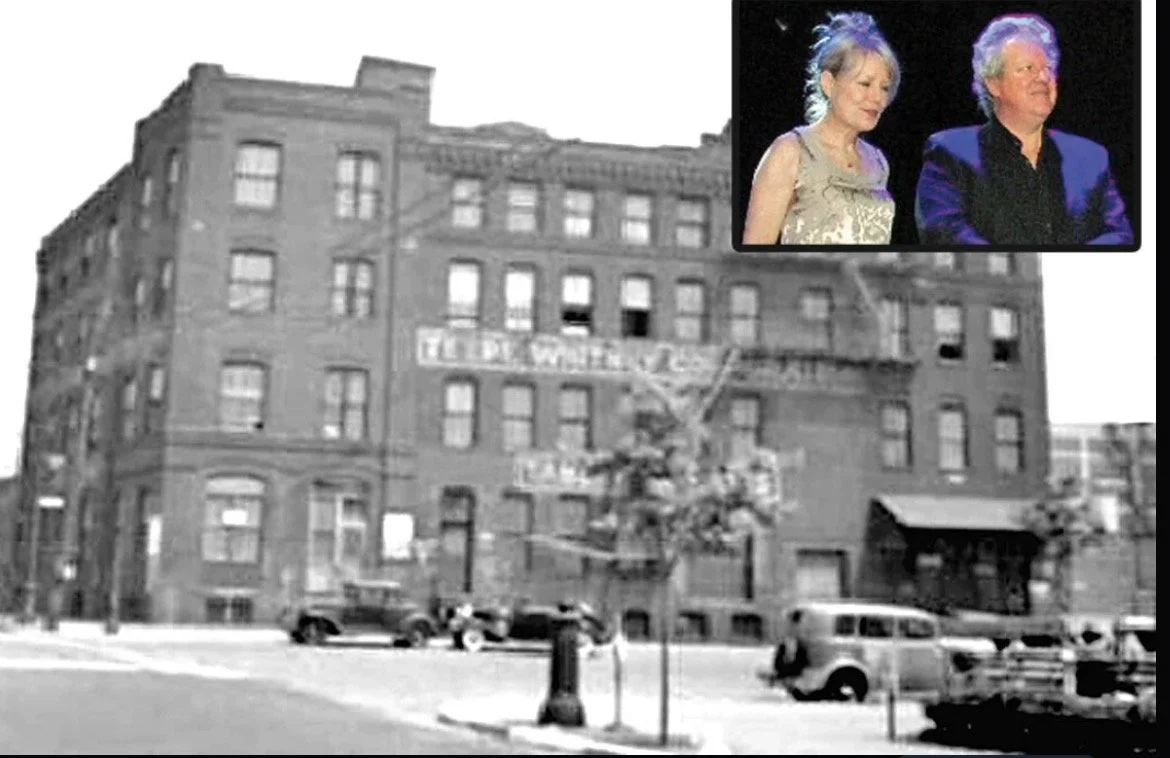
Tina Weymouth and Chris Frantz, who lived in the former Teepe-Whitney building during the early years of Talking Heads.
Only a few blocks away, in Long Island City’s industrial quiet, they practiced and worked during the band’s early years.
It is a remarkable turn in the life of a single building: once tied to the manufacture of furniture, later tied to the making of music.
A New York Afterlife
That transformation gives Louis J. Viehmann’s story its wider resonance.
He belonged to one New York: the city of factories, business directories, lodges and civic committees. The building tied to his career later belonged to another: the city of lofts, artistic reinvention and new sound.
The continuity is not obvious until you look closely. But it is there.
New York often preserves its past not by freezing it in place, but by giving it a new use. Old structures survive because later generations find something else to do inside them.
That is what happened here.
A furniture factory became a communal loft. A site of industrial labor became part of music history. And through that unlikely continuity, the world of Louis J. Viehmann remains faintly visible.
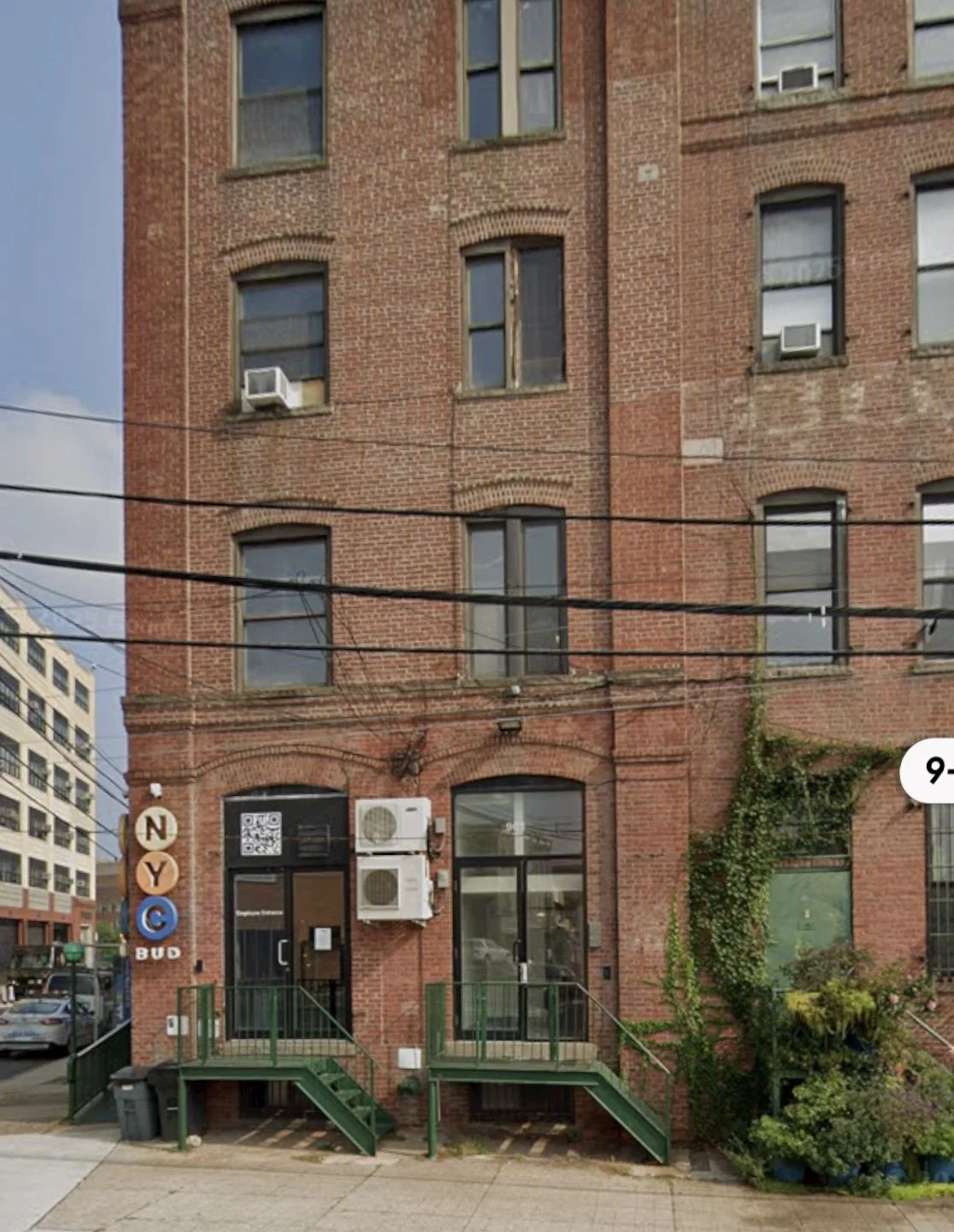
The building today, still standing as a layered artifact of Long Island City’s industrial and cultural past.
First came the age of manufacturers and Masons.
Then came the age of artists and bands.
Between them stands the old Teepe-Whitney building; still carrying both stories.
Related Articles
Island City Lodge 586 -- From Hunters Point to Elmhurst
Island City Lodge Charter — Where the story begins
Island City Lodge Cornerstone Ceremony — The temple takes shape
Island City Masonic Temple — The Court Square Temple
Advance Service Mizpah Lodge No. 586 — The Story continues here