Don Rickles, Freemasonry, and Geba Lodge No. 954 in Jackson Heights
Long before he was America’s most elegant insult machine, Don Rickles was a 25-year-old actor in Jackson Heights, living at 89-09 32nd Avenue and being raised a Master Mason in Geba Lodge No. 954.
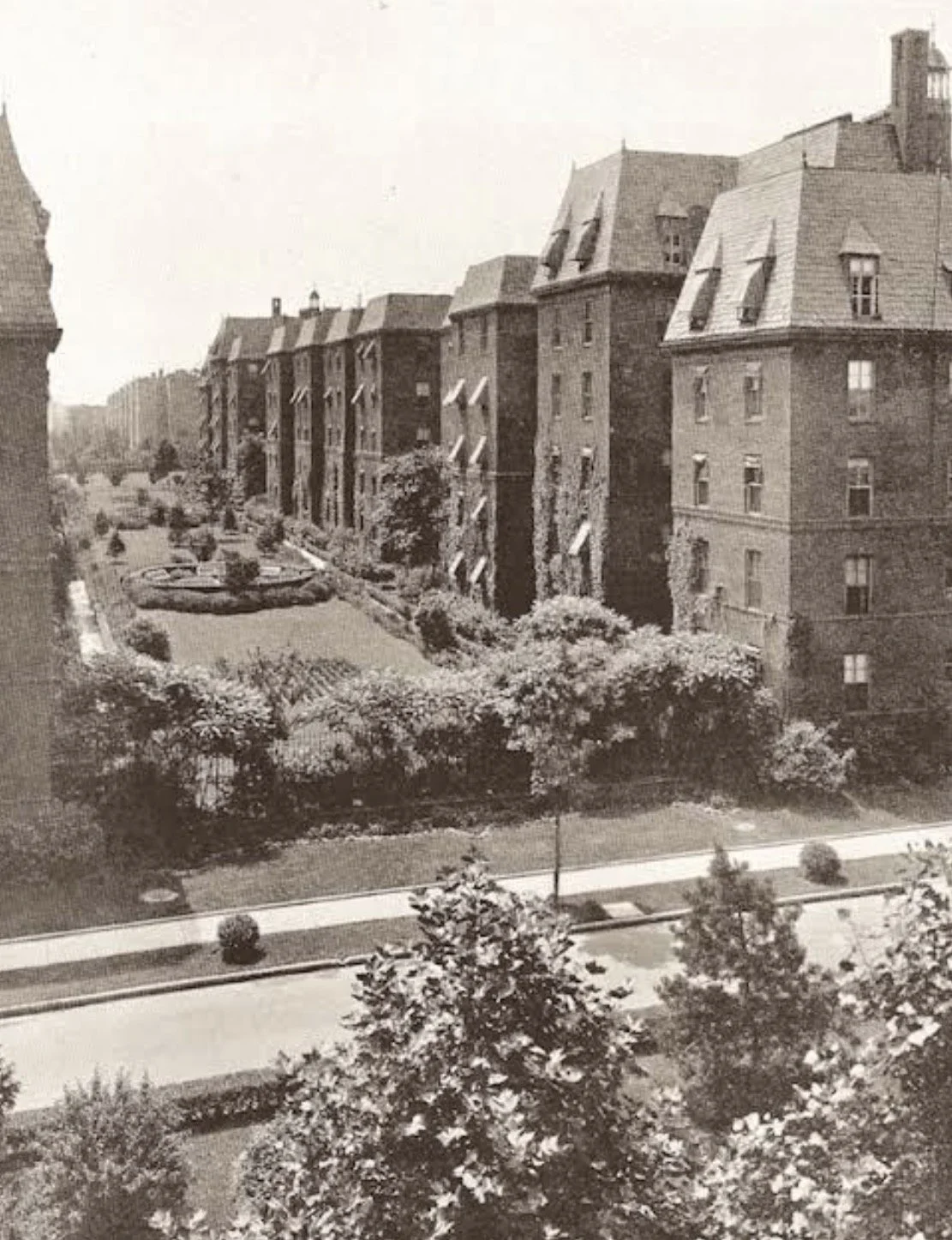
Jackson Heights in the mid-20th century, a neighborhood of apartment houses and upward-looking families where Don Rickles lived as a young actor.
The lodge books in Queens preserve Don Rickles in an earlier, quieter form: not yet the legendary comic in a tuxedo, but a young actor following his father, Max S. Rickles, an insurance man born in Russia, into the fraternity. Together their entries tell a family story that is part neighborhood history, part immigrant history, and part wonderfully improbable prelude to American entertainment history.
There are certain names that arrive trailing their own weather. Don Rickles is one of them. You do not so much hear the name as brace for impact. It suggests a tuxedo, a fixed glare, a line delivered with the precision of a thrown dart, and some poor celebrity in the front row wondering how on earth he has ended up being vivisected for the amusement of Nevada. And yet before all that, before the casinos, before the television appearances, before he became the world’s most beloved practitioner of affectionate demolition, Don Rickles was, in the records of Geba Lodge No. 954, simply this: the 634th brother raised, on June 9, 1953, age 25, occupation actor, residence 89-09 32nd Avenue, Jackson Heights.
It is a marvelous line, and not least because of its restraint. History, when it is in a bookkeeping mood, can be magnificently deadpan. It does not write, “Future legend of American comedy enters room.” It does not note comic timing, stage presence, or the fact that this young man would one day build a career from saying appalling things so charmingly that audiences felt grateful for the privilege. It just says actor. Jackson Heights. June 9, 1953. And that, somehow, makes it better.
Brother Don Rickles in Queens
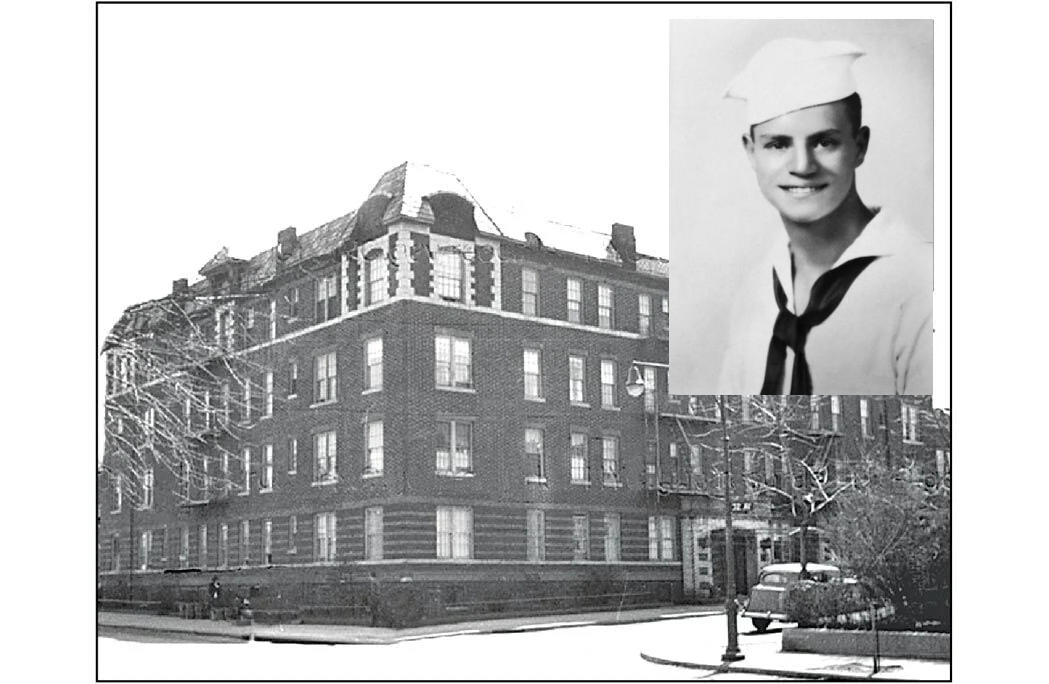
89-09 32nd Avenue in Jackson Heights, the shared address recorded for both Don Rickles and his father in Geba Lodge records
This is one of the great pleasures of local history: it refuses to be overawed by fame. It takes a man later wrapped in legend and returns him to an address, an occupation, a neighborhood, and a set of ordinary facts. Don Rickles, before he was Don Rickles in the fully polished American sense, was a young man in Queens trying on the improbable title of “actor,” which in 1953 was either the beginning of something magnificent or a prolonged and expensive misunderstanding.
One suspects it may have been both.
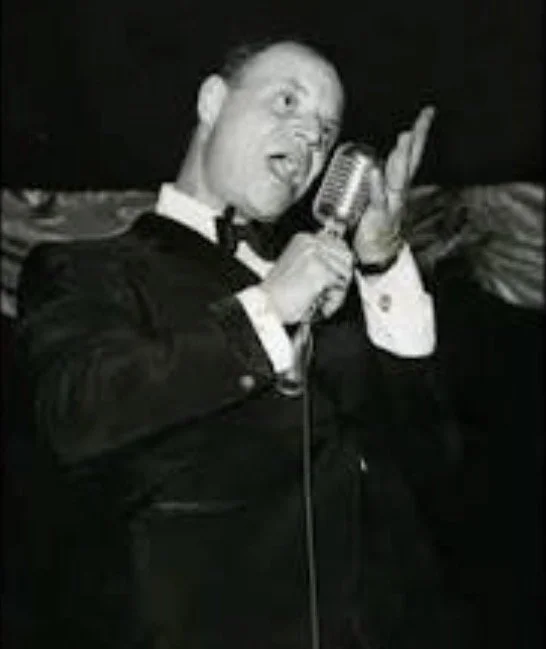
Don Rickles in his early career, around the time he was listed simply as an “actor” in the Geba Lodge records.
The address places him in Jackson Heights, and Jackson Heights, in mid-century New York, was one of those neighborhoods where aspiration put on a clean shirt and tried to look sensible. It was respectable but not stuffy, ambitious without being grand, full of apartment buildings, family routines, and the endless practical business of becoming American in an outer-borough setting. It was exactly the sort of place where a future celebrity might still be known primarily as somebody’s son, somebody’s neighbor, or the young fellow with the interesting profession.
And in this case, he was very much somebody’s son.
A Father, A Son, and One Address
For six years before Don Rickles was raised in Geba Lodge, his father had entered the same fraternity. According to the lodge books, Max S. Rickles was the 493rd brother raised in Geba Lodge No. 954 on November 25, 1947. He is listed as an insurance man, born in Russia, living at the very same address: 89-09 32nd Avenue, Jackson Heights 49.

The Geba Lodge No. 954 record: Max Rickles, age 49, occupation “Insurance”
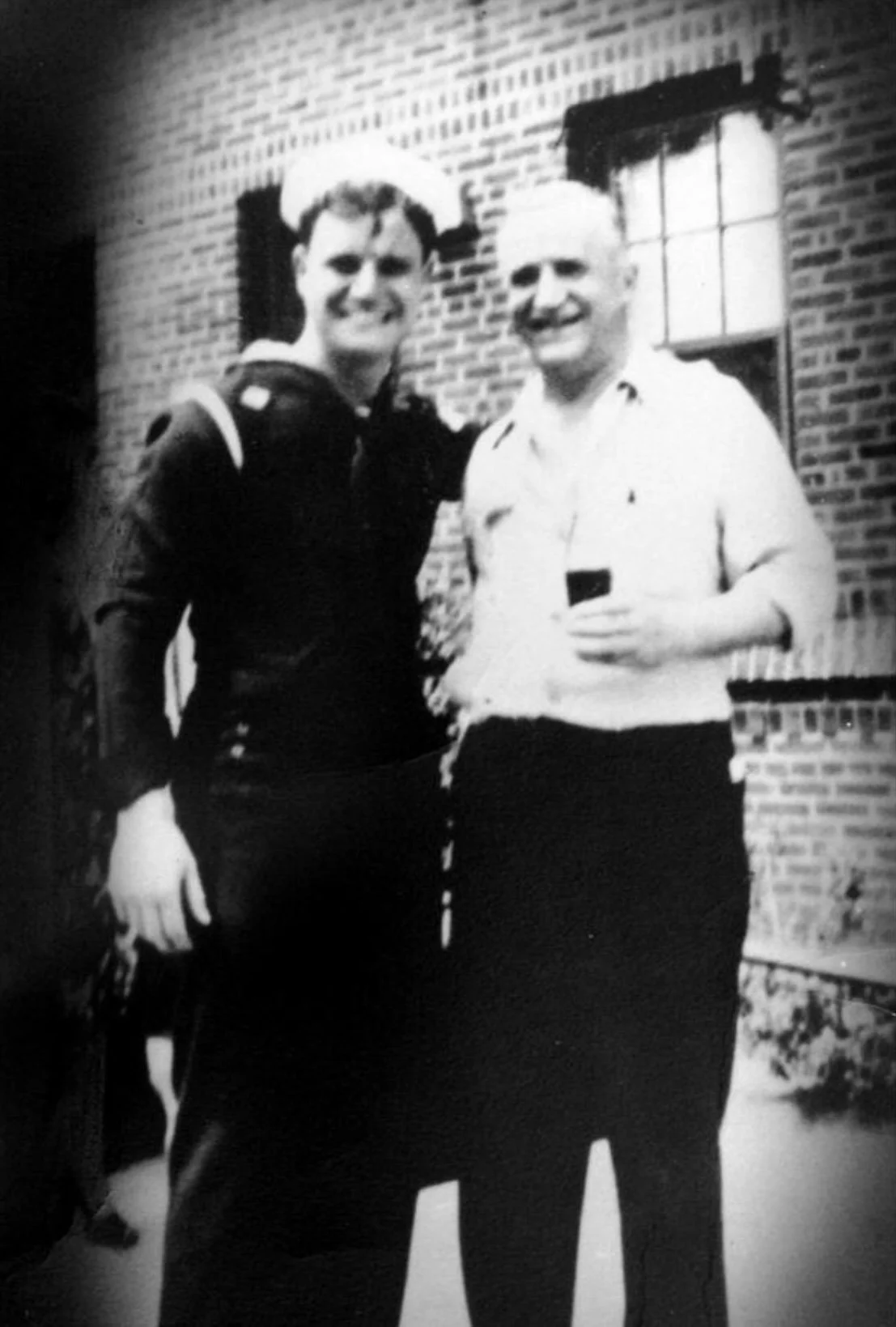
Max and Don Rickles, Fathr and Son.
That one detail, the shared address, does what no amount of grand commentary can do. It shrinks the distance between icon and household. Suddenly this is not merely a celebrity tidbit but a family tableau. There is the father, Max S. Rickles, Russian-born, steady, respectable, in insurance. There is the son, Don, younger, theatrical, harder to classify, listed optimistically and perhaps defiantly as an actor. And there they are, both in the records of Geba Lodge No. 954, both tied to the same Jackson Heights home, both woven into the civic and fraternal life of Queens.
It is difficult not to admire the symmetry. The father belongs to one classic New York pattern: immigrant or near-immigrant striving, practical profession, family stability, participation in institutions that offered structure, fellowship, and standing. The son belongs to another, equally New York pattern: the local boy with impossible ambitions, trying to become something theatrical, unlikely, and larger than life. Put the two together and you have, in miniature, an entire borough history. Queens has always been full of such pairings: the cautious father, the restless son; the stable household, the extravagant dream; the sensible address and the wildly unreasonable future.
A Small Clarification in the Record
A 2017 memorial post on Freemasons For Dummies noted that Don Rickles was associated, in later consolidated form, with what is today Service City Geba Lodge No. 1009, while also observing that the exact original lodge had proven difficult to pin down. That hesitation was understandable. Lodge lineages can become cloudy as mergers and renumberings accumulate, and memory is often less exact than paper.
In this case, however, the paper is unusually obliging. The surviving records place Rickles in Geba Lodge No. 954, where he appears as the 634th brother raised. They also give the date as June 9, 1953.
Even the calendar has a way of siding with the ledger. June 6 of that year fell on a Saturday; not the likeliest occasion for a regular communication of a Masonic lodge. June 9, by contrast, was a Tuesday, and Geba Lodge met on the second and fourth Tuesdays in 1953. The entry therefore has not only documentary force but the added comfort of fitting the known rhythm of the lodge’s own life.
It is a small point, perhaps, but such small points are the very substance of responsible local history. Service City Geba No. 1009 may preserve the later institutional inheritance; the contemporary record lets us say something more exact. Don Rickles was raised in Geba Lodge No. 954, on June 9, 1953.

The Geba Lodge No. 954 record: Don Rickles, age 25, occupation “actor,” raised June 9, 1953.
The Quiet Bureaucracy of Greatness
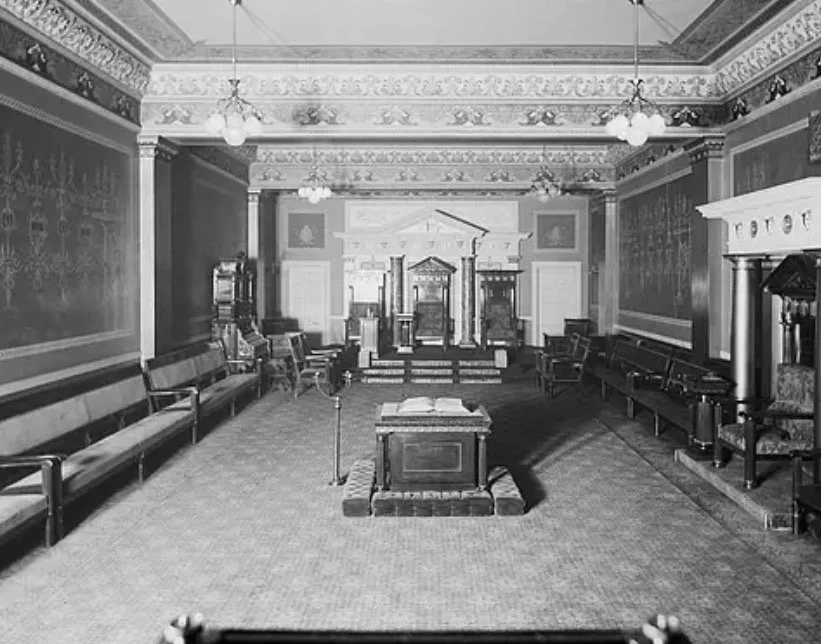
Masonic lodges brought together men from across professions, offering structure, ritual, and fraternity in mid-century New York.
And Masonry, in its own quiet way, was one of the places where such stories intersected. It offered order, continuity, and fraternity, but it also gathered men of highly varied temperaments. Bankers and salesmen, contractors and clerks, veterans and merchants, men who spoke in paragraphs and men who barely spoke at all. Into this world came Don Rickles, who would go on to make a national art form out of saying exactly the wrong thing with exactly the right timing.
There is, one must admit, something irresistibly amusing in that. Not because the lodge record is comic in itself — it is not — but because it catches him before the full force of his public identity arrived. It preserves him in a stage of life when everything still looked normal on paper. Age: 25. Occupation: actor. Residence: Jackson Heights. It has all the modesty of a census line and none of the grandeur of what was coming. The young man standing there in the record book is not yet “Mr. Warmth.” He is still, so to speak, under construction.
And perhaps that is what makes the entry so appealing. It restores suspense to a story that, in retrospect, seems inevitable. We know what happened to Don Rickles. We know the voice, the timing, the devastating twinkle, the peculiar miracle by which insult became endearment. But the lodge record does not know any of that. It meets him at a point when fame is still theoretical, when “actor” is just an occupational description and not yet a national credential.
That is often where the best history lives: not in the thunderclap, but in the ordinary line written before the thunderclap.
Postwar Queens and the Institutions of Belonging
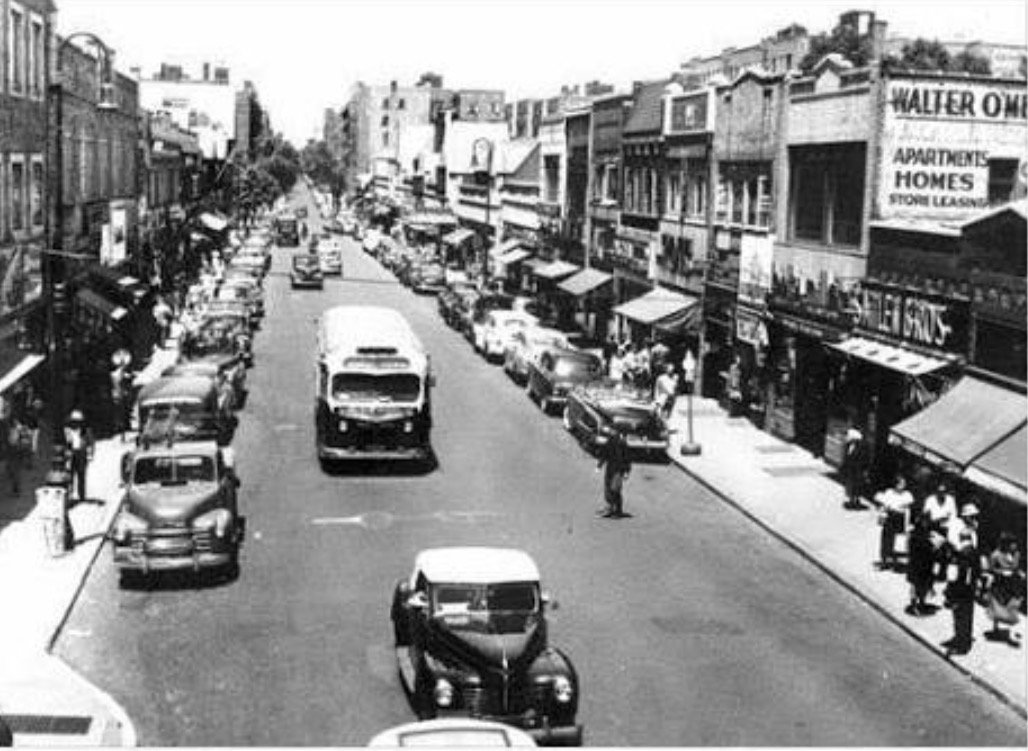
Postwar Queens: a borough of apartment living, family routines, and institutions that anchored everyday life.
Max Rickles’ entry deepens the picture further. Born in Russia, working in insurance, raised in 1947, he appears as part of that vast and essential New York saga in which immigrant families used every available institution, neighborhood, work, religion, fraternity, association, to build solidity in a city more famous for motion than rest. To find him in Geba Lodge is to see one more example of how lodges functioned not merely as ceremonial societies but as places of belonging. They were sites where identity could be affirmed, relationships strengthened, and families, in some broader civic sense, anchored.
Then the son follows. Not into insurance, evidently, but into the lodge.
And that, in its way, is rather perfect. Families often pass along values without passing along occupations. The son need not become the father in order to inherit something real from him. In the Rickles household at 89-09 32nd Avenue, whatever else was discussed, work, ambition, money, the hazards of show business, the hazards of not being in show business, there was also, evidently, a Masonic connection strong enough to draw father and son into the same lodge record.
One can almost feel in it the texture of postwar Queens: a borough full of striving families, apartment-house domesticity, social clubs, veterans, salesmen, hopefuls, and the dozens of institutions that gave shape to everyday life. We often remember celebrity as though it erupted from nowhere, but it rarely does. It comes from blocks, buildings, routines, family tables, ethnic transitions, practical fathers, restless sons, and neighborhoods that taught people how to mix confidence with perseverance. Jackson Heights was one such place. Geba Lodge was one such institution.
Significance of These Records
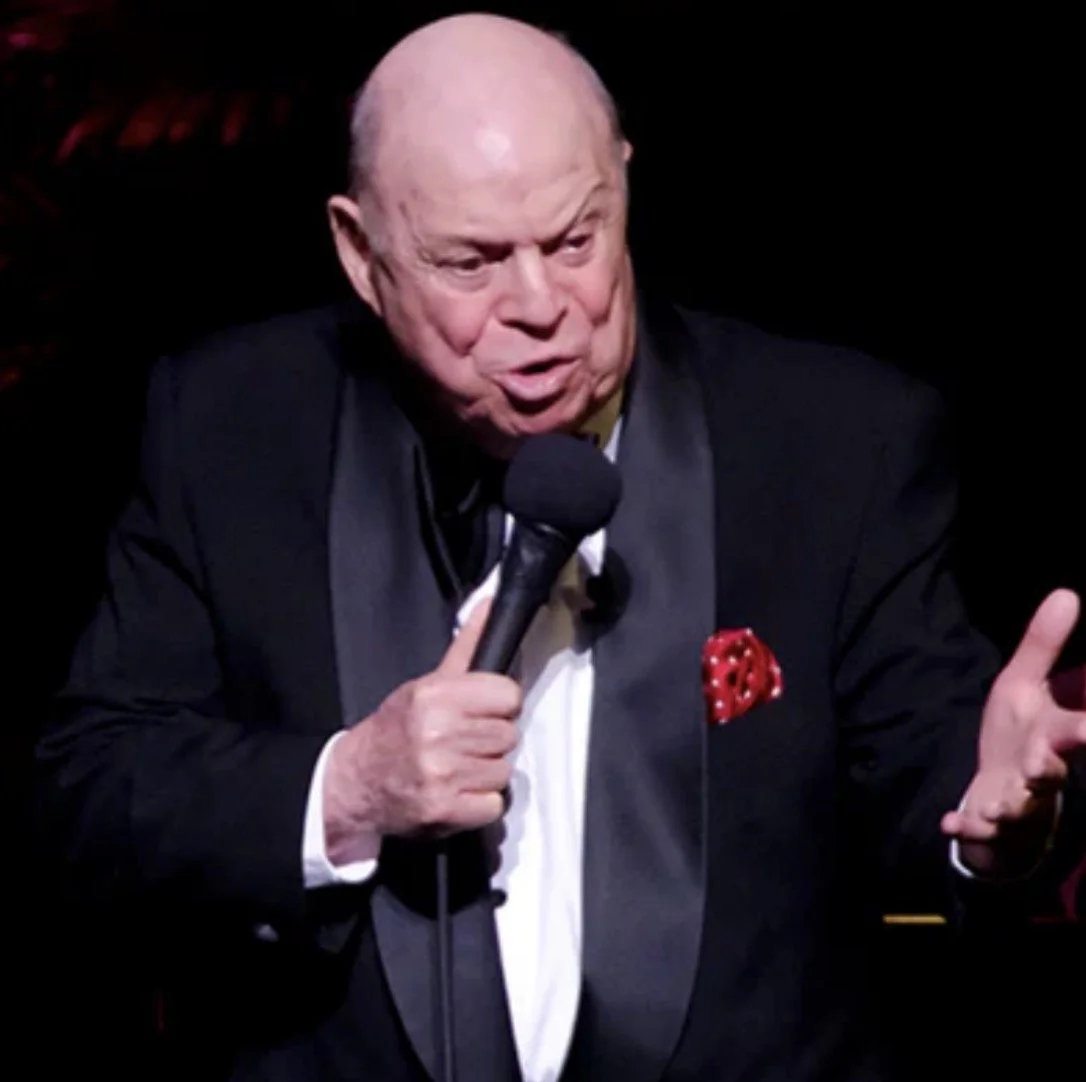
The finished article: Don Rickles at full force, far removed from the quiet ledger line that first recorded him.
This is why we value these records. Not because they allow us to claim Don Rickles for Queens in some possessive way, though they certainly place him here. And not merely because they add one glittering name to the annals of local Masonry. They important because they return scale and texture to a famous life. They show us a son following a father. They show us a household rather than a headline. They show us, in perhaps the most New York way imaginable, that even a man who would one day own a room with a glance first had to exist in a place where his name was just another line in a ledger.
And what a line it is.
So before the tuxedo, before the late-night couch, before the casino crowd bent double while some poor soul in the front row was verbally filleted with surgical cheerfulness, there was Brother Don Rickles: raised on June 9, 1953, the 634th brother of Geba Lodge No. 954, 25 years old, an actor, of 89-09 32nd Avenue, Jackson Heights. And a few years before him, at the same address, there was his father, Brother Max S. Rickles, insurance man, Russian-born, raised into the same lodge. It is the sort of detail local history specializes in preserving, small on the page, immense in implication, and it reminds us that even the loudest legends begin quietly, at home, among the brethren.
Related Articles
Geba Lodge no.954 -- A Queens Lodge
Geba Lodge Charter and Notable Members — The men behind the legacy
Advance Service Mizpah Lodge No. 586 — The Story continues here