Brother David Wechsler: From Geba Lodge to a World Legacy of the Mind
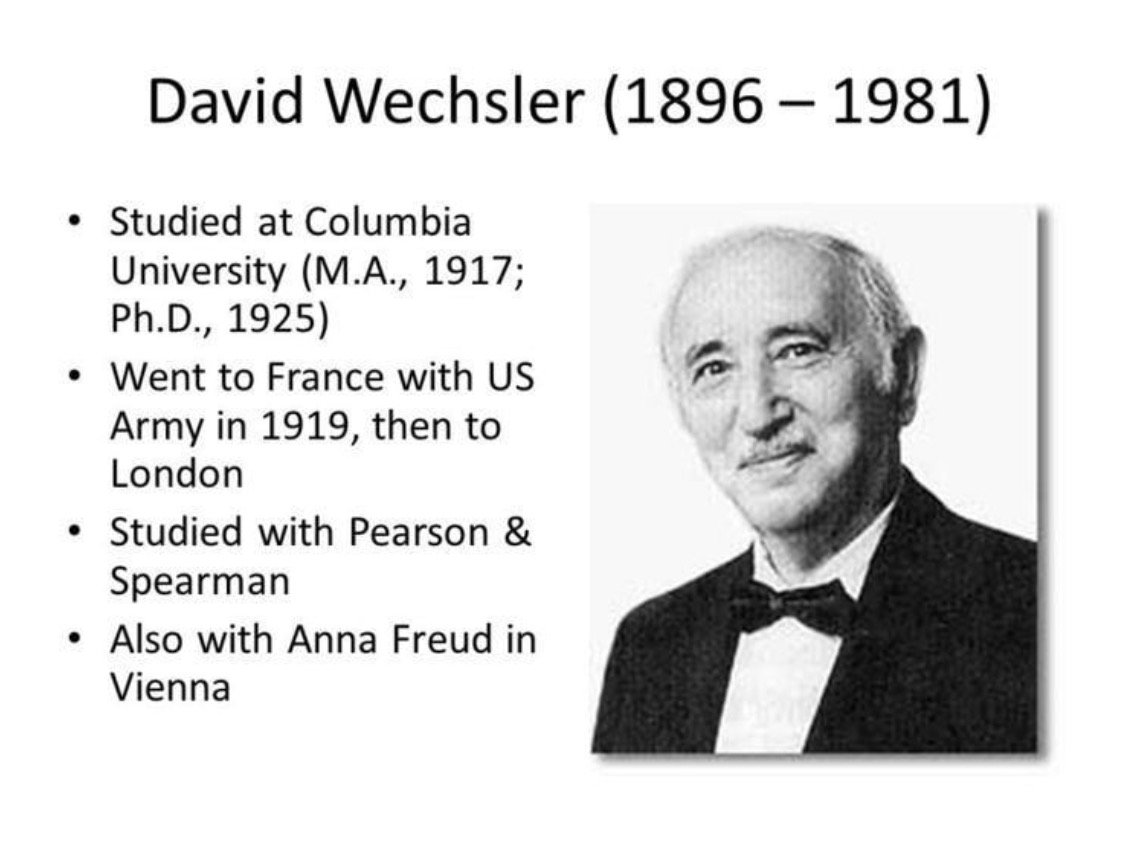
In the spring of 1919, as the First World War receded into memory and New York City surged into a new century, a young immigrant scholar stood in a Masonic lodge room in Elmhurst, Queens.
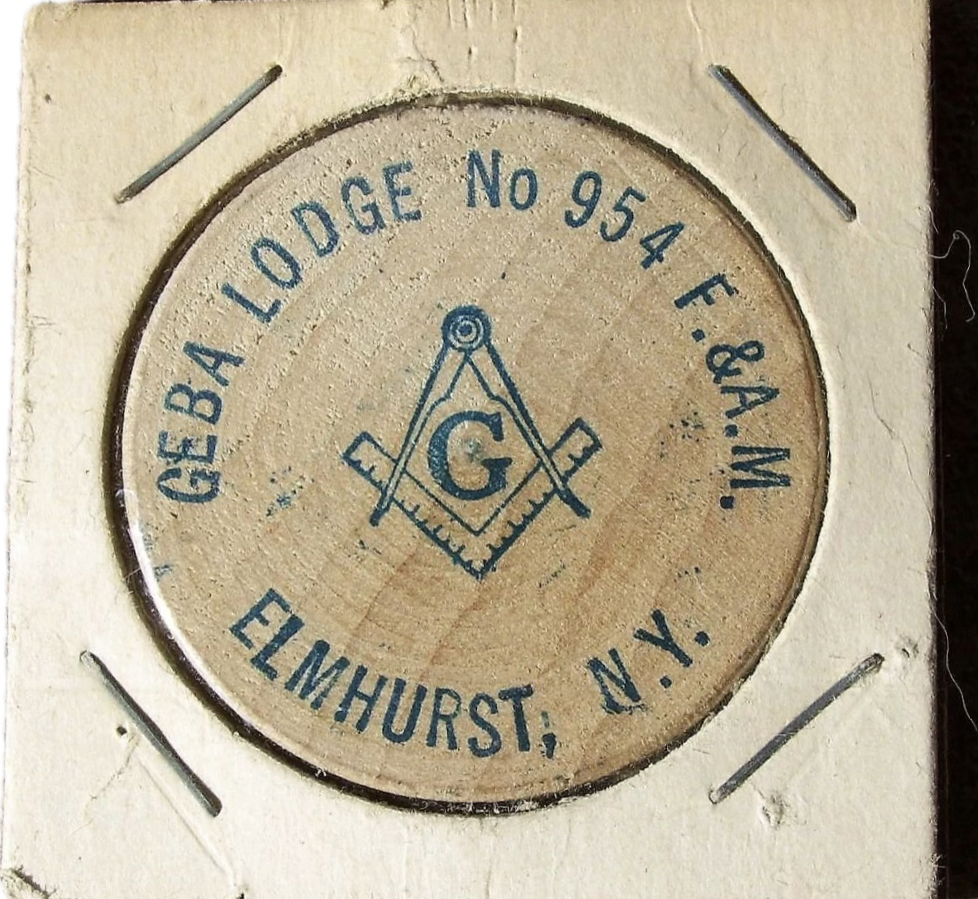
On April 8th, 1919, at Geba Lodge No. 954, F. & A.M., under the Grand Lodge of New York, David Wechsler was raised to the sublime degree of Master Mason. He was recorded as the 27th member of this newly chartered Lodge, one of the earliest Brothers to help shape its character and traditions.
Geba Lodge, chartered in 1919 in the growing community of Elmhurst, would, in time, become one of the six Lodges that form the proud heritage of Advance Service Mizpah Lodge No. 586. Among its early Brethren, few would go on to leave as wide an imprint on the world as Dr. David Wechsler.
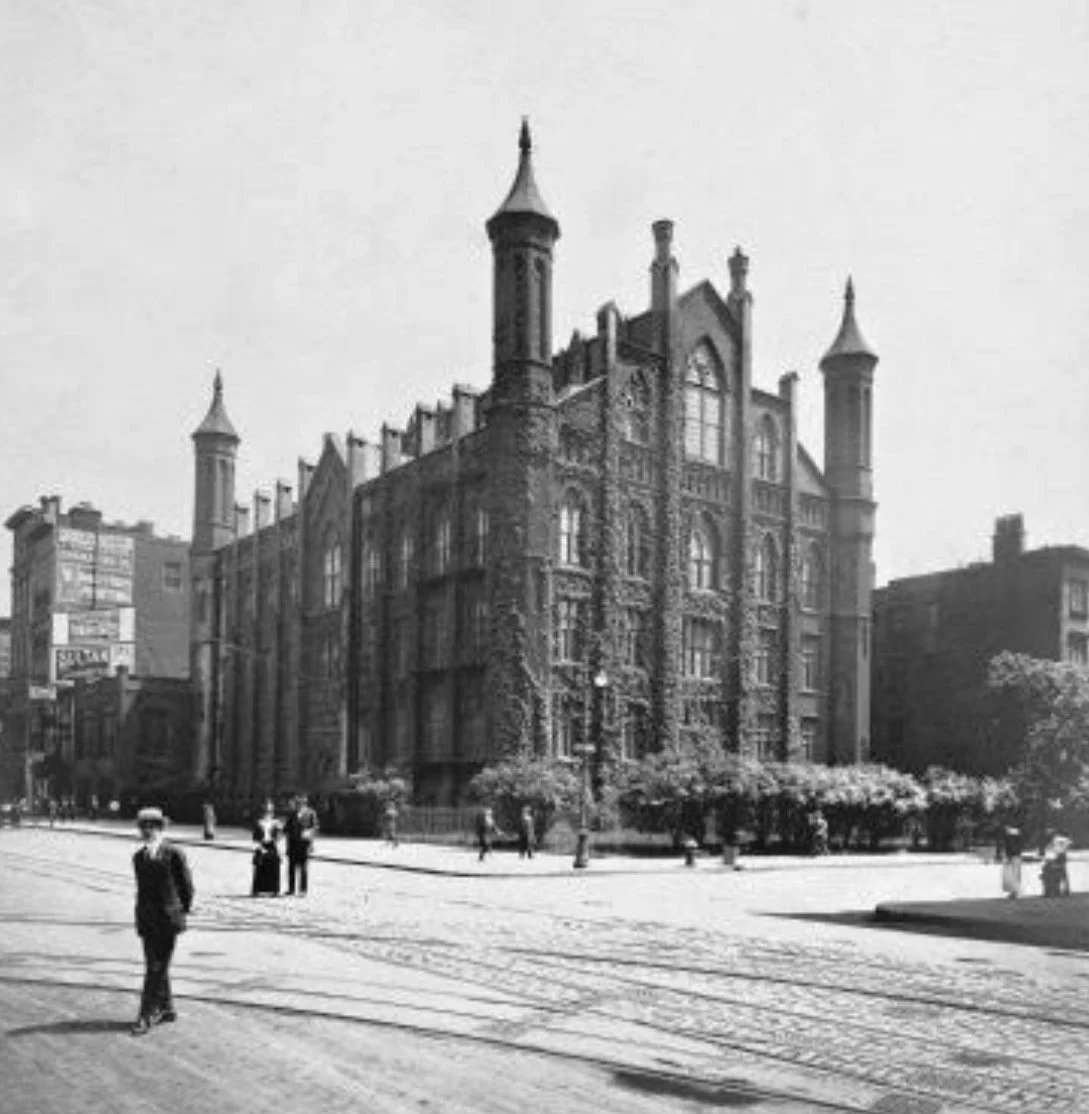
City College, NY Circa 1925
An Immigrant Brother in a New Century
Born in Romania in 1896, David Wechsler came to the United States as a child, part of the great wave of immigrants who remade New York in their own image of hope and hard work. Like many who would later knock at the West Gate, he knew the realities of struggle, adaptation, and the constant demand to learn and to improve oneself.
By 1916, he had graduated from City College of New York, and by 1925 he earned his Ph.D. in psychology from Columbia University under the guidance of the noted psychologist Robert S. Woodworth. During the First World War Wechsler served by applying his emerging expertise to the Army’s early psychological testing, scoring Army Alpha examinations for recruits.
It was a time when both the world and the science of the mind were changing rapidly. In this era, Wechsler found in Freemasonry a fraternity emphasizing moral character, personal improvement, and service; values that harmonized closely with the work he was beginning to do in psychology.
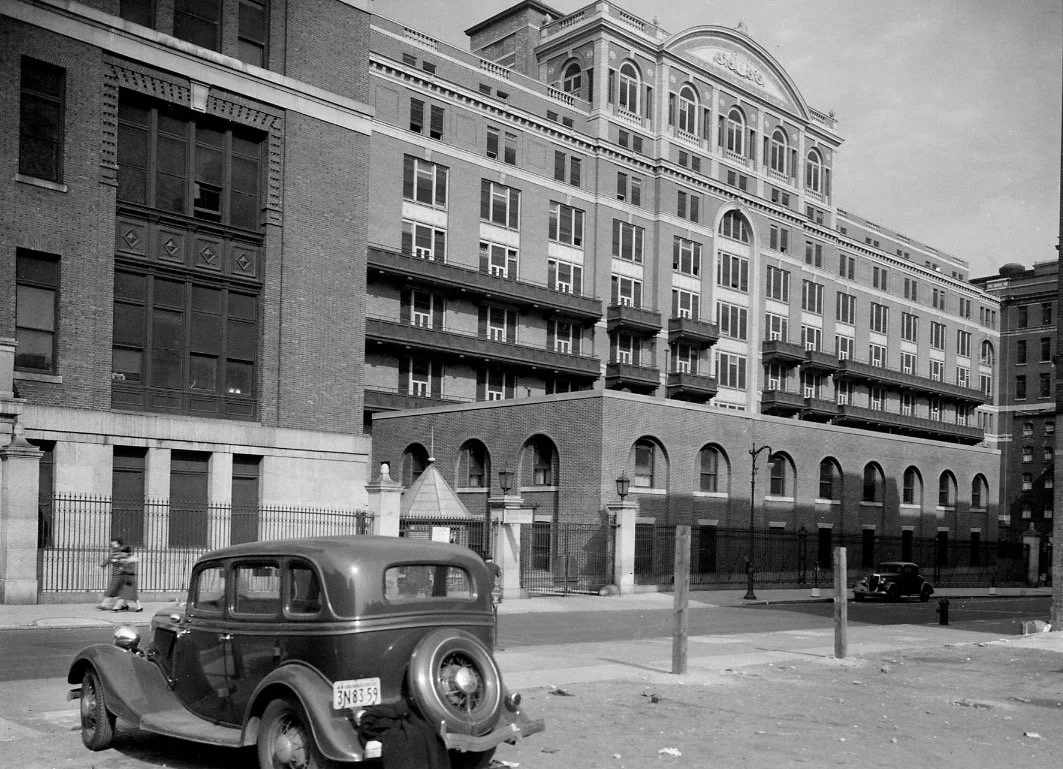
Bellevue Hospital, NY Circa 1932
Building a New Science at Bellevue
In 1932, Wechsler was appointed Chief Psychologist at Bellevue Psychiatric Hospital in New York City, a position he held until 1967. For thirty-five years he quietly transformed the way the world understands intelligence.
At Bellevue, Wechsler encountered adults from every corner of the social and cultural spectrum; immigrants, laborers, professionals, returning soldiers, and, in the years after the Second World War, Holocaust survivors and displaced persons. The standard intelligence tests of the day, rooted in rigid “mental age” concepts, often failed such diverse populations.
Drawing on his clinical experience, he concluded that these tests did not do justice to the full range of human ability. They were, in effect, partial working tools; useful, but incomplete.
So he designed something entirely new.
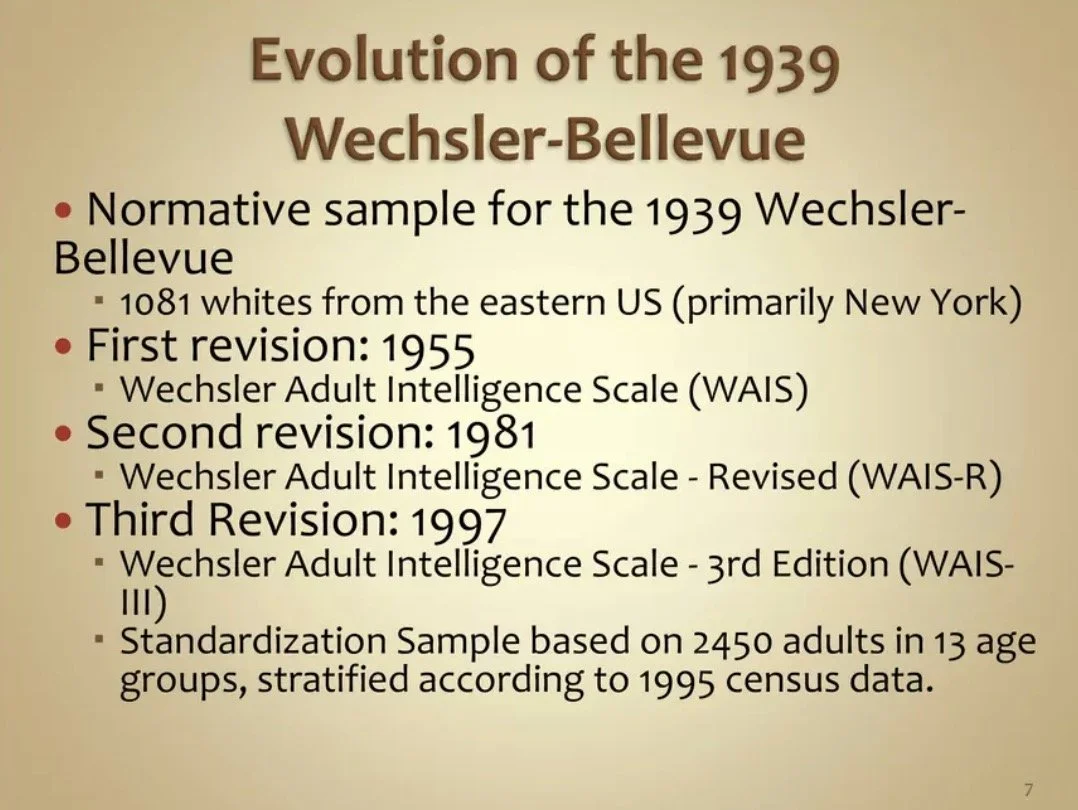
The Wechsler Scales: A New Working Tool of the Mind
In 1939, Wechsler unveiled the Wechsler-Bellevue Intelligence Scale, created at Bellevue but destined for worldwide use. It introduced several groundbreaking ideas:
• Deviation IQ: Instead of calculating IQ as a simple ratio of “mental age” to chronological age, Wechsler used a statistical norm, a mean of 100 with a standard deviation of 15, allowing individuals to be compared fairly to others of their own age group.
• Verbal and Performance Scales: He split the test into verbal tasks (such as vocabulary, arithmetic, and general knowledge) and performance tasks (such as block design, picture arrangement, and symbol coding), acknowledging that intelligence is multifaceted, not a single blunt measure.
• Later expansions: Over time, his approach grew to encompass working memory and processing speed, capturing how we hold, manipulate, and act on information.
This first scale became the ancestor of an entire family of instruments:
• Wechsler Intelligence Scale for Children (WISC): first published in 1949, giving educators and clinicians a more refined tool for understanding the abilities and needs of school‑aged children.
• Wechsler Adult Intelligence Scale (WAIS): first published in 1955, the formal successor to the Wechsler-Bellevue, now in its fourth major revision (WAIS-IV) and still in everyday use.
• Wechsler Preschool and Primary Scale of Intelligence (WPPSI): introduced in 1967, extending his work to the youngest learners.
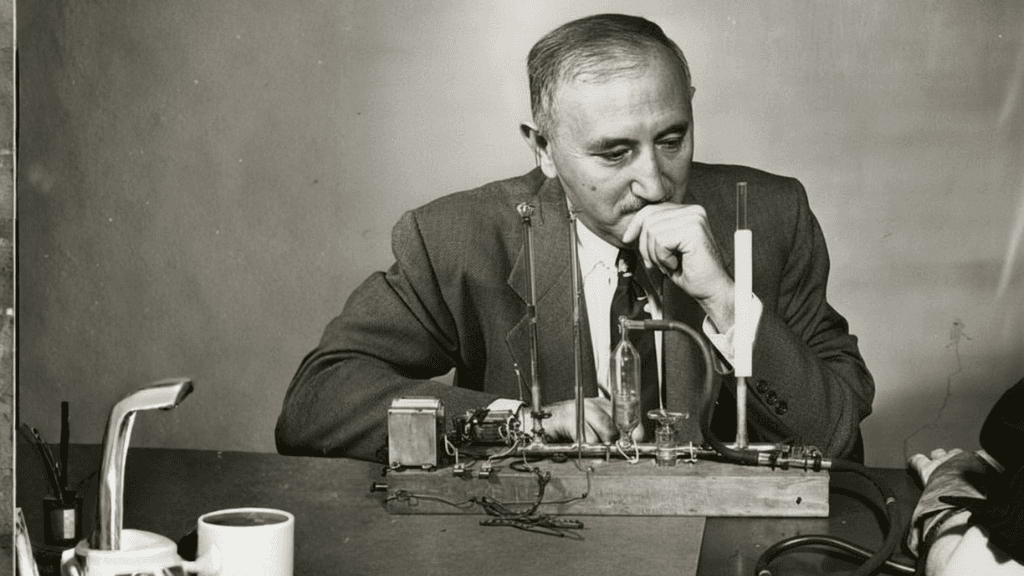
By the 1960s, as much as 80% of intelligence testing in the United States relied on Wechsler‑based scales. His methods became a global standard, influencing education, clinical diagnosis, neuropsychology, and forensic practice across continents.
Service Beyond the Hospital Walls
Wechsler’s work was not confined to a quiet office at Bellevue. During World War II, he served as a consultant to the U.S. War Department, helping refine psychological selection and assessment methods for military service.
In 1947, he played a leading role in a mission to establish mental health clinics for Jewish displaced persons in Cyprus, bringing structured psychological care, and, indirectly, his emerging intelligence tools, to some of the most vulnerable survivors of the war.
These efforts echoed a Masonic understanding that knowledge and skill are to be placed in the service of humanity, especially where suffering and need are greatest.
A Private Man, a Public Legacy
In his personal life, David Wechsler was known as a reserved and private man. He married twice; first to Roma Goldstine in 1921, and later, in 1935, to Gertrude Goldberg, with whom he had two daughters. Outside of his work at Bellevue and his professional writings, he kept a relatively low profile.
Yet the corpus of his work was extraordinary. Among his key publications were:
• **The Range of Human Capacities (1935) **
• The Measurement of Adult Intelligence (1939)
• **The Measurement and Appraisal of Adult Intelligence (1958, 4th ed.) **
Alongside these major works, he authored and co‑authored manuals for the WAIS, WISC, and WPPSI, and contributed to more than 80 related publications over his career. In these writings, he defined intelligence as a global capacity to act purposefully, think rationally, and deal effectively with the environment; a definition that echoes the Masonic ideal of a balanced, thoughtful, and effective life.
For his professional achievements, Wechsler received the American Psychological Association’s Distinguished Professional Contribution Award in 1973. A 2002 survey ranked him 51st among the most eminent psychologists of the 20th century. Today, thousands of scientific articles each year still cite his scales and concepts.
He passed to the Celestial Lodge above on May 2, 1981, in New York City.
From Geba Lodge to Advance Service Mizpah Lodge No. 586
The story of Geba Lodge No. 954 is itself a chapter in the evolving tapestry of Freemasonry in Queens. Chartered in 1919 in Elmhurst, Geba Lodge would later join with five sister Lodges in a series of consolidations and unions that ultimately gave rise to Advance Service Mizpah Lodge No. 586.
Within that lineage stands the record of a young immigrant Brother, the 27th member of Geba Lodge, raised on April 8th, 1919. That Brother went on to build the most widely used intelligence tests in modern history, shaping how teachers, physicians, psychologists, courts, and governments understand human ability.
For AstoriaMasons.org and for the Brethren of Advance Service Mizpah Lodge No. 586, his life is a reminder that:
• The candidate who kneels at our altar today may tomorrow change the world.
• The quiet working tools of the mind, study, discipline, reflection, can leave a legacy as enduring as any stone.
• Our Lodge histories are not only lists of names and dates, but stories of men whose lives carried Masonic values into science, service, and society.
Honoring Brother Wechsler Today
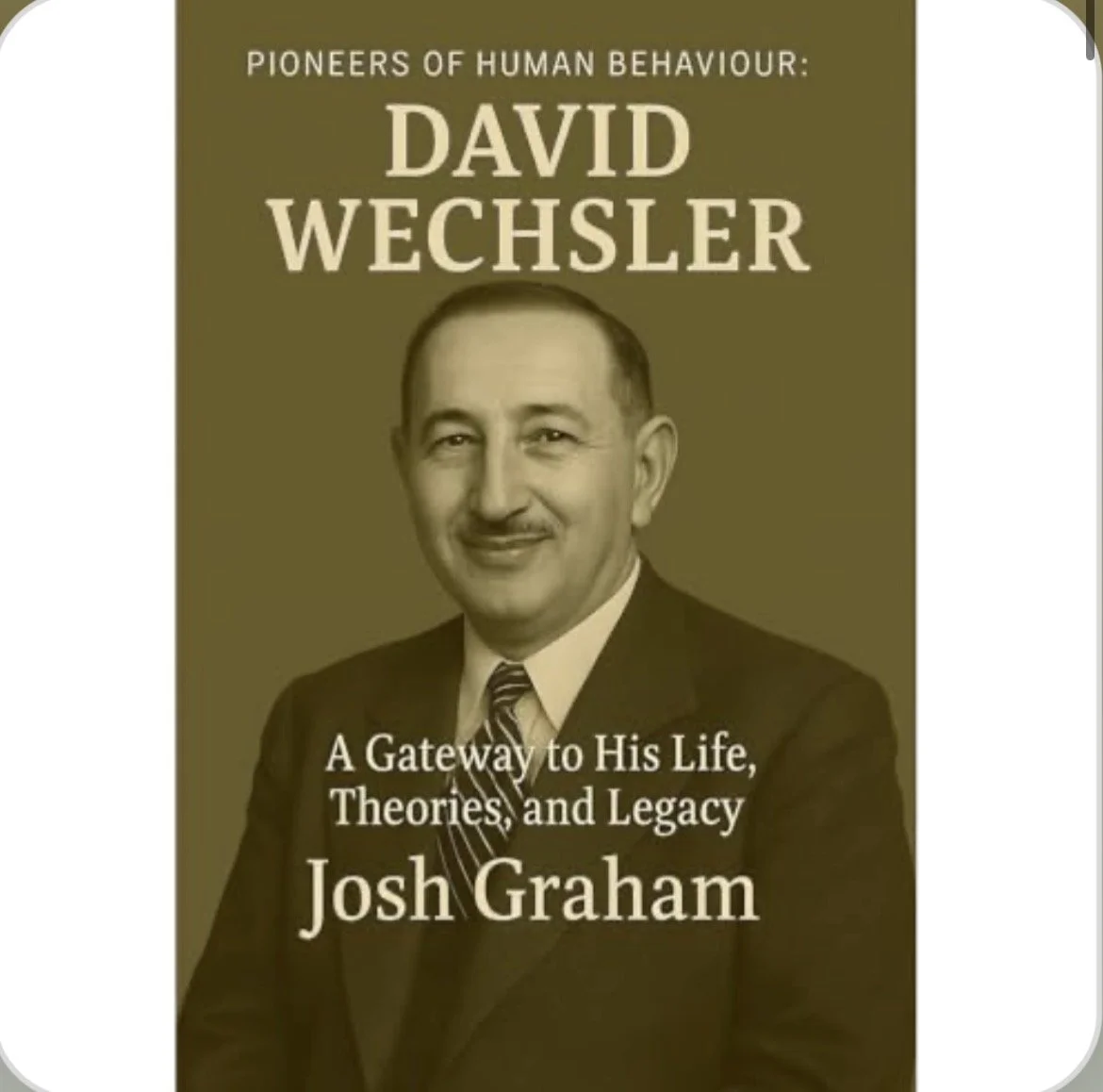
While there are no statues or monuments in his honor, Dr. David Wechsler’s name is spoken daily in clinics, schools, hospitals, and courtrooms wherever a Wechsler scale is administered. His instruments help:
• Identify learning needs and giftedness in children
• Guide treatment planning for brain injuries and neurocognitive disorders
• Inform critical decisions in mental health and forensic evaluations
In this way, the legacy of our 27th member of Geba Lodge No. 954 lives on in a very practical sense: each time a life is better understood, a child receives appropriate support, or a patient’s abilities are carefully respected, his work is present.
For us, as Masons, his story connects the quiet ritual of a Lodge room in Elmhurst in 1919 with a worldwide legacy of service to humanity’s understanding of itself. For the author of this article himself incidentally, studying Wechsler’s system personally revolutionized my understand of self, others and the various types pf human intelligence. I personally scorn most other Intelligence scales.
As we labor under the banner of Advance Service Mizpah Lodge No. 586, we remember that among the stones in our historical foundation lies the work and memory of Brother David Wechsler; immigrant, psychologist, and Master Mason, whose tools helped reveal the architecture of the human mind.

Wechsler Pre-School & Early Intelligence tool still sold globally